
Rabbit supplies split by one question. Does the rabbit live outside in a hutch, or inside with the family? Answer that and the rest of the list writes itself.
I keep rescue rabbits. They came the way most of my animals came, needing a place to be, and I have built and bought hutches over the years to hold them. Henderson summers taught me more about rabbit housing than any spec sheet did.
This is the hub for rabbit gear on Pet Approves. The housing decision first, then the hutch, the indoor setup, the litter box, hay and water, chewing, and cleaning. Each section hands off to the deep guide.

Best Rabbit Litter Box 2026: My 9 Picks After Owning Several
Rescue rabbits at home, litter boxes over the years, then a full research day. Nine rabbit litter boxes ranked for corner fit, big rabbits, hay feeders and cages, with a feature check table, litter training advice from owners, and my top three by price.
Read the guide →Best Rabbit Hutch 2026: My 11 Picks After Owning Several
Rescue rabbits, several hutches over the years and the Henderson heat, then a full research day. Eleven rabbit hutches ranked for outdoors, indoors, two rabbits, heavy duty builds and winter, with a feature check table and my top three by price.
Read the guide →Best Indoor Rabbit Cage 2026: My 9 Picks After Owning Several
Rescue rabbits, a run of cages and pens that failed, then a full research day. Nine indoor rabbit cages, playpens and panel kits ranked for large rabbits, bonded pairs, free roam and litter training, with a feature check table and my top three by price.
Read the guide →Jump to:
Outdoor or indoor, the first decision
Everything else follows this one. An outdoor rabbit needs shade, airflow and a latch a raccoon cannot work. An indoor rabbit needs a litter box and a house with the cords put away.
Heat is what I watch. In Henderson the sun did the damage long before anything else did, and cheap plastic gear cracked in a season. Shade over the hutch and moving air through it matter more than the photo on the box.
Predators are the other half. Raccoons open simple latches with their hands. Dogs and hawks work the gaps. Look for two-step latches, and for welded wire mesh rather than the thin hexagonal netting sold for garden fencing.
Read what the maker actually claims. “Weather resistant” and “predator proof” are marketing phrases with no shared definition, so check the described material, the mesh gauge and the latch style instead of the adjective.
Indoors, the trade is different. You control temperature, the rabbit gets more of your day, and the cost moves from the hutch to the flooring, the pen and the proofing.
Plenty of owners run both. The rabbit lives inside and spends the mild part of the year in a secure run outside, which means buying one good indoor setup and one weatherproof hutch rather than compromising on either.
| Where the rabbit lives | What it needs most | Guide |
|---|---|---|
| Outside, warm climate | Shade, airflow, raised floor | Hutch |
| Outside, cold winters | Wind break, deep bedding, a cover | Hutch |
| Outside, two rabbits | More floor area, a second level | Hutch |
| Inside, one room | Pen, mats, litter box | Indoor cage |
| Inside, free roam | Proofing, chew options | Indoor cage |
| Either, always | Litter box and hay feeder | Litter box |
The hutch
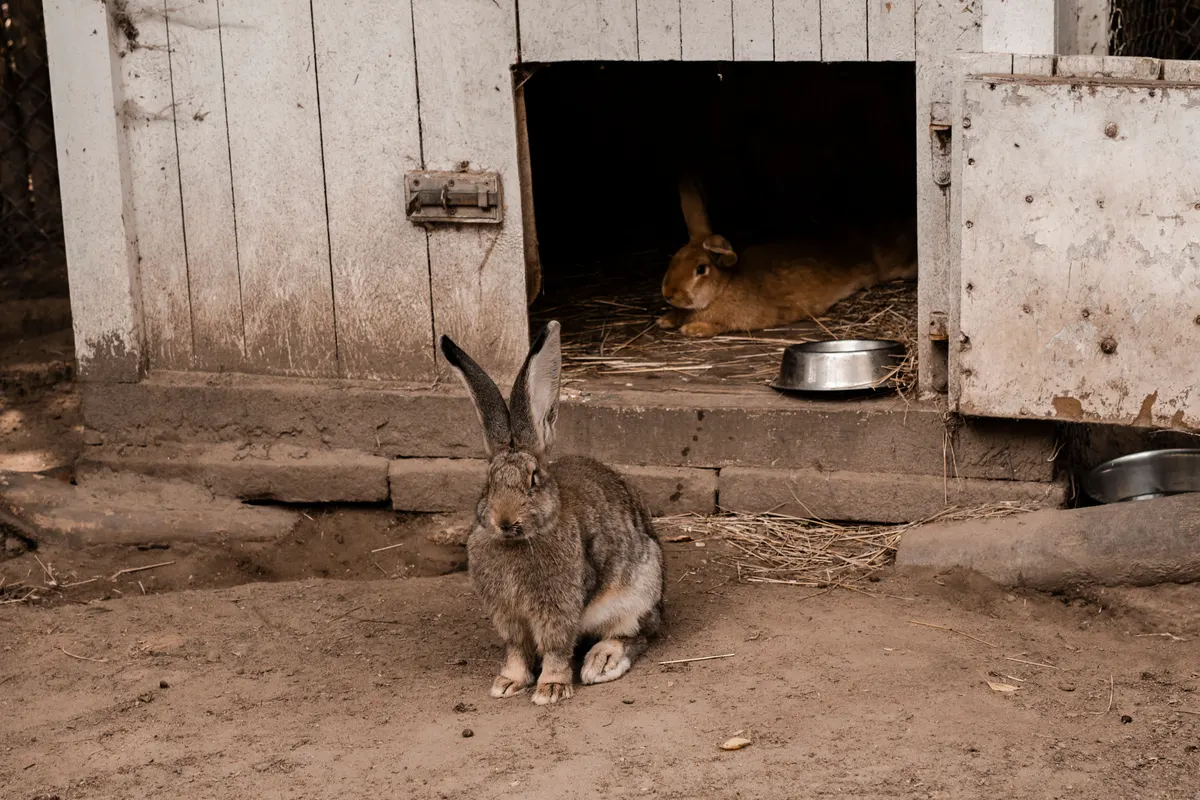
Floor area beats every other feature. A rabbit should be able to take several hops in a line, stand up on its back legs without touching the roof, and stretch out flat. Rescue groups publish minimum floor areas, and the roomy end of that guidance is the better buy.
Look at the floor itself. Bare wire under the feet is the complaint owners raise most, so either buy a solid floor or drop in a resting mat over the wire.
Then the build. A roof overhang keeps rain off the mesh. A pull-out tray turns cleaning into a two minute job. A ramp to a run underneath adds space on the same footprint, and a wide door lets you reach the back corner without crawling in.
Two rabbits need more than a second rabbit’s worth of room. They need somewhere to get away from each other, which usually means a second level or a long run rather than a wider box.
Winter is a separate build. Owners in cold states add a wind break on the open side, deeper bedding, and a fitted cover, and they move the hutch off the exposed corner of the yard.
Where you stand the hutch matters as much as which one you buy. Shade for the afternoon, off the bare ground, and close enough to the house that you actually walk past it twice a day. A hutch at the back fence gets checked half as often as one by the door.
The rabbit hutch guide is the deep version of this section. It covers outdoor and indoor hutches, the models sized for two rabbits, the heavy duty and predator resistant builds, and what changes for a winter enclosure.
The indoor cage and free roam
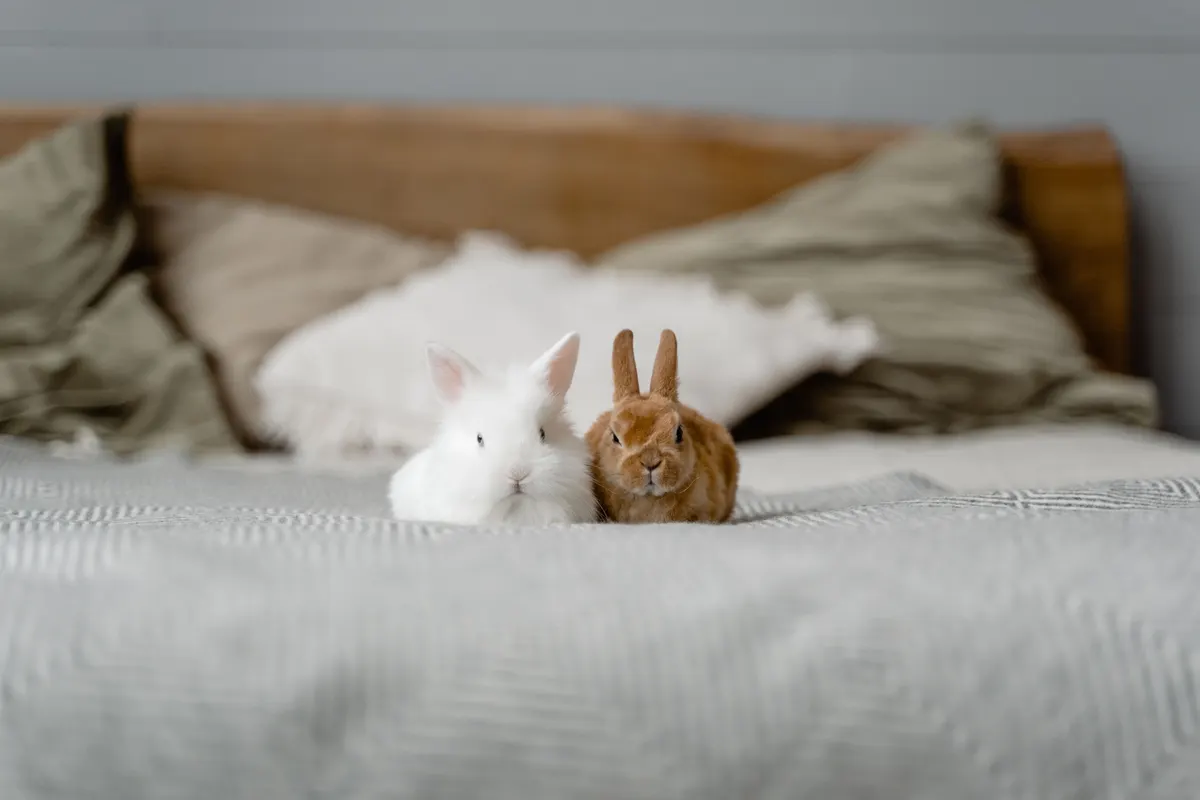
The indoor answer has moved. The cage is a base camp, not a home. Most indoor owners now run a cage or pen the rabbit sleeps and eats in, with the door open onto a room for most of the day.
That makes the pen more useful than a tall cage. An exercise pen gives real floor area, folds flat, and reshapes to fit a corner or a whole room. A cage with a wide front door does the same job in less space.
Flooring is the part people forget. Hard floors are slippery under a rabbit, so owners lay washable rugs, foam mats or seagrass mats over the running lanes. It also saves the floor from the corner the rabbit picks.
Check three things on any indoor cage. A door wide enough for the litter box to come out whole. A tray deep enough to hold litter and hay. A ramp with grip if there is a second level, because bare plastic is a slide.
Free roam is the far end of the same idea, and it trades the cage cost for proofing work. Start with one room, prove the rabbit uses the box, then open more of the house.
The indoor rabbit cage guide takes it further, with the large cages, the setups for two rabbits, playpens for free roam, cages that come with a litter box, and what flooring holds up.
Litter training and the box
Rabbits pick a corner and stay with it. That is the whole trick. Watch which corner they choose in the first few days, then put the box there rather than where you would prefer it.
Size the box to the rabbit, not to the cage. The whole animal should sit inside it with room to turn, and a large rabbit in a small corner box will simply stand beside it instead.
Corner boxes fit a cage and waste no floor. Rectangular boxes suit a big rabbit or a pen. A high back panel is worth looking for, since an unneutered rabbit will spray up the wall behind the box.
The built in hay feeder is the design that changed my setups. Rabbits eat and use the box at the same time, so a rack on the back of the box keeps the hay clean and keeps the rabbit sitting in the right place.
Two rabbits want two boxes, and often a third in the spot they both keep using. Boxes are the cheap part of the setup, so add one rather than argue with the corner they picked.
On litter, rabbit rescues and the litter makers both steer owners to paper based bedding, and away from clumping cat litter and from pine and cedar shavings. Follow that guidance rather than my opinion, and ask the rescue you adopted from.
The rabbit litter box guide compares corner boxes, large boxes, the ones with a hay feeder built in, the models made to clip into a cage, and how owners run the training.
Hay, food and water
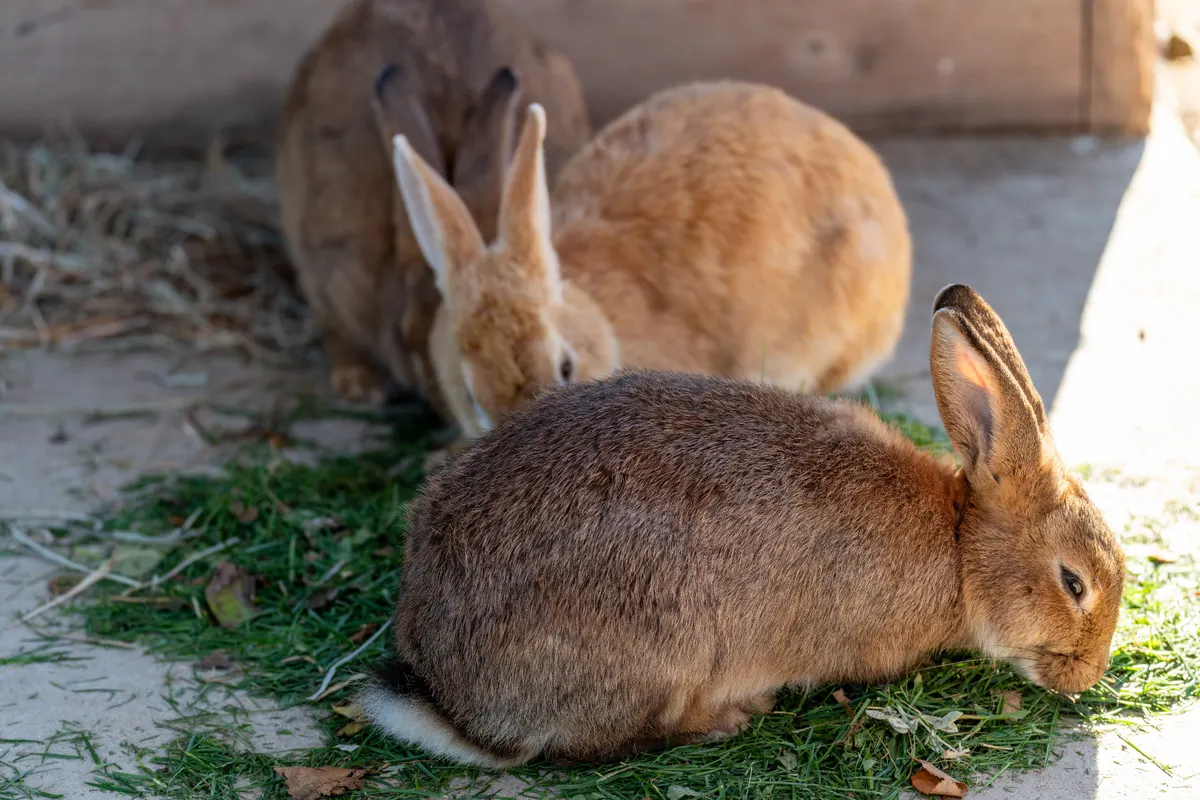
Hay is the bulk of a rabbit’s diet. That is the standard guidance from rabbit rescues and vets, not a claim of mine, and it decides what you buy. Hay is the thing you rebuy forever, so buy the storage before the accessories.
A mounted hay rack or feeder keeps it off the floor and out of the litter. Owners who feed from a pile go through more hay and clean more often.
Pellets and greens are a smaller part of the day, and the amount is a question for the rescue or your vet, not for a gear site. What I can tell you is that a heavy ceramic bowl stays put and a light plastic one becomes a toy.
Water is where I have an opinion. Bowls beat bottles for most rabbits. A bottle drips, jams and freezes, and you cannot see how much went down.
Use a heavy ceramic or stainless bowl wide enough for the rabbit’s face. In the desert my plastic bowls cracked and went brittle in one summer, and the same heat splits a bottle’s seal. Two bowls in hot weather, so one is always full.
Outdoors, put the bowl in the shaded end of the hutch and check it twice a day when it is hot.
Chewing and bunny proofing
Chewing is not bad behaviour, it is the animal. A rabbit will test everything at floor level, so the plan is to move what matters and offer something better.
Cords first. Slide them into split loom tubing or hard cord covers, run them behind furniture, and lift the ones you can. This is the one job worth doing before the rabbit ever gets loose in a room.
Then the edges. Owners guard baseboards and door frames with corrugated plastic panels or clear guards, and block the gaps under sofas and beds so nobody digs in and stays there.
Give better options than the furniture. Untreated willow, apple wood sticks, plain cardboard, seagrass and grass mats. Rotate them, because a chew the rabbit has ignored for a week stops counting as a toy.
My mechanic’s eye applies here the same as it does to truck parts. Thin cloth and soft plastic last days. Hardwood, seagrass, welded metal and heavy canvas last, and the cheap thing bought twice was never the cheap thing.
Do the proofing room by room, and sit on the floor to do it. Everything a rabbit can reach is visible from down there and invisible from standing height.
Cleaning the setup
Rabbit cleaning is a daily job and a weekly job. Daily, the litter box gets emptied and the loose hay swept up. Weekly, the enclosure gets stripped and wiped down.
Rabbit urine leaves a hard white scale on trays and wire. Plain white vinegar dissolves it, left to sit for a few minutes, and it beats scrubbing.
For an accident outside the box, an enzyme cleaner is the one that removes the smell rather than covering it. Cover the spot properly and the rabbit stops treating it as the new corner.
Skip ammonia based cleaners near the pen. Pet cleaner makers warn against them for exactly this reason, since ammonia reads like urine to the animal and invites a repeat.
A hand vacuum earns its place indoors. Hay travels further than you expect, and a small vacuum by the pen turns a chore into a thirty second habit.
The pet cleaning supplies guide covers the enzyme cleaners, stain removers and vacuums that work across every animal in the house, rabbits included.
What to buy first, in order
New owners tend to buy the cute things first and the housing last. Run it the other way. The list below is the order I would buy in for a rabbit coming home this week.
- The enclosure. Hutch or indoor cage and pen, sized on floor area, bought one size up from the minimum.
- Litter box and paper based litter. Sized to the rabbit, sited in the corner the rabbit already chose.
- Hay, and a rack to hold it. The rebuy that never stops, so sort the storage on day one.
- Heavy bowls, ceramic or stainless, one for water and one for pellets. Two water bowls in hot weather.
- Flooring. Resting mat over any wire floor, washable rugs or foam over slippery indoor floors.
- Chew supply. Willow, apple sticks, cardboard and grass mats, kept in rotation.
- Proofing kit. Cord covers and baseboard guards, fitted before the first free roam session.
- Cleaning kit and a carrier. Vinegar, enzyme cleaner, hand vacuum, and a hard sided carrier for the vet trip.
Note: the enclosure is the purchase people redo. Almost nobody writes that their hutch or pen turned out too big. Buy the space now and you skip the second purchase.
Frequently asked questions
What supplies does a rabbit need?
A hutch or an indoor cage and pen, a litter box with paper based litter, hay and a rack, heavy water and food bowls, flooring or mats, chew material, and a cleaning kit. A carrier for the vet trip completes it.
Is a hutch or an indoor cage better?
It depends on your climate and your house. Outdoors you are solving heat, weather and predators. Indoors you are solving flooring, a litter box and chewed cords, and the rabbit gets more of your day.
How big should a rabbit hutch be?
Big enough for several hops in a line, standing upright without touching the roof, and stretching out flat. Rescue groups publish minimum floor areas, so use those and then go up a size.
Can rabbits be litter trained?
Yes, most take to it quickly. They already choose one corner, so putting the box in that corner does most of the work for you.
What can a rabbit chew safely?
Untreated willow, apple wood, plain cardboard, and seagrass or grass mats are the usual owner answers. Check anything new with the rescue or your vet before it goes in the pen.
How often should you clean a rabbit hutch?
Empty the litter box and sweep the loose hay daily. Strip and wipe the whole enclosure weekly, using white vinegar on the white scale that builds up on trays and wire.
 Gunner Vance