
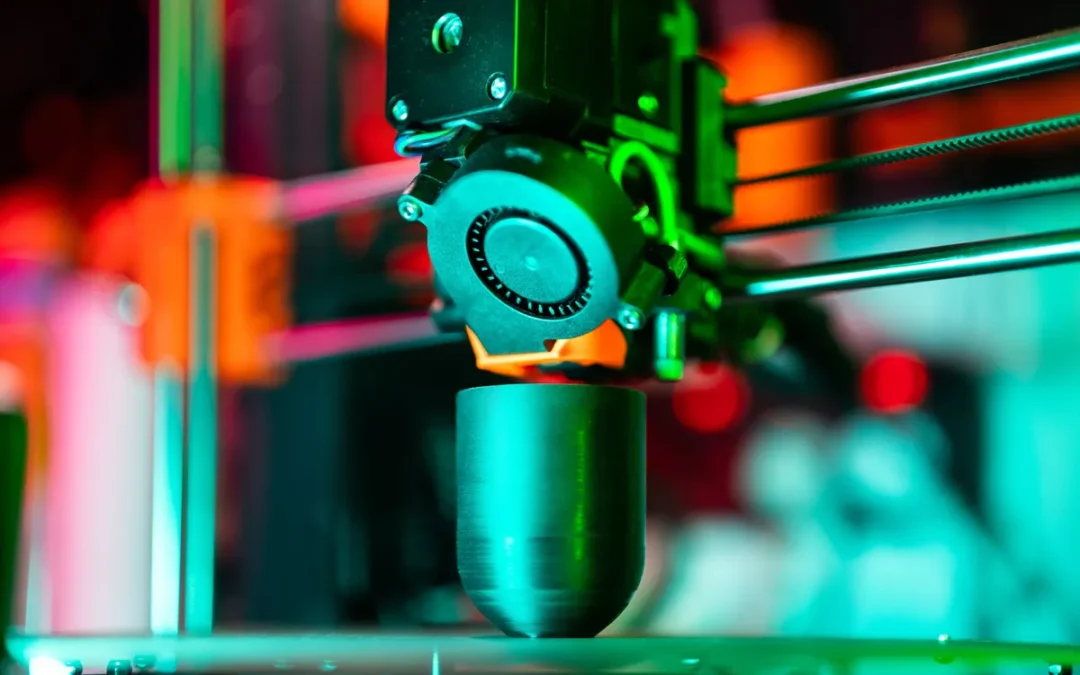
The best 3D printed dog accessories are the ones that hold something rather than go in a dog’s mouth. Raised bowl stands, ID tags, treat puzzles, leash and collar wall racks, and replacement clips for gear you already own. Printed plastic is not a chew toy, and a printed bowl is not a food safe bowl.
I am Gunner, and I am a fabricator rather than a printer guy. I spent years in an off-road shop building things out of metal and heavy canvas, including the beds my own dogs slept on.
So I looked at this the way I look at a bracket. What is the part doing, what load goes through it, and does plastic belong there at all.
Part of our pet cleaning supplies guide.
Jump to:
What Is Worth Printing And What Is Not
Sort every idea into two piles before you spend an evening on it.
Print the things that hold, hang or space something out. A bracket, a stand, a hook, a tray, a spacer. Plastic is good at shape and terrible at abuse.
Buy the things that take load, teeth or hot water. That covers collars, leashes, carabiners, tie outs, crate doors and anything your dog puts in their mouth unsupervised.
- Worth printing: bowl stands, tag blanks, treat puzzles, leash racks, bag holders, collar keepers, replacement clips.
- Not worth printing: anything holding your dog’s weight, anything clipping to a collar under load, anything meant to be chewed.
- Borderline: water bowls and food scoops, which work only with a stainless insert doing the actual food contact.
That single sorting step is what separates the best 3D printed dog accessories from a drawer of parts that cracked.
Raised Bowl Stands And Feeder Bases
This is the category printing was made for. The stand does nothing but hold two bowls at a height, and no part of it touches food.
Print the frame, buy the bowls. Stainless bowls drop into a printed base, wash properly, and outlast every printed part around them.
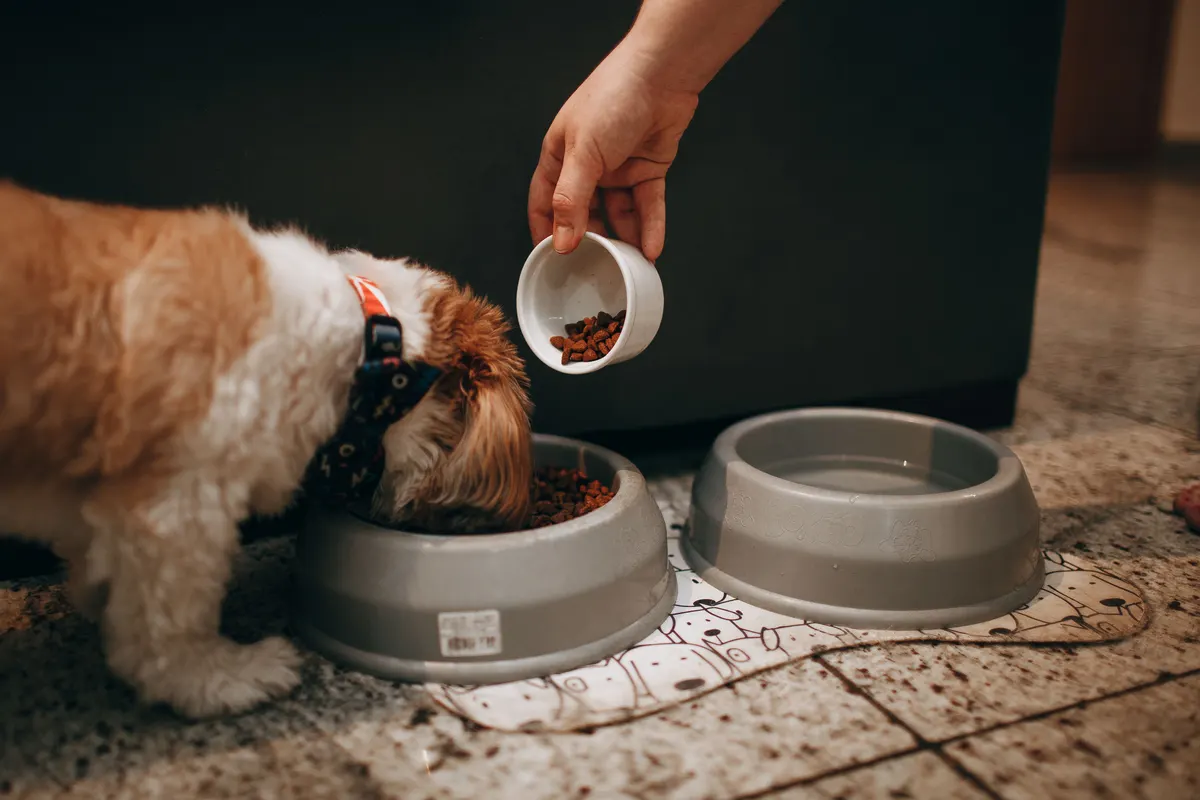
What I look at in a model, same as any bracket:
- A base wider than the top, so a shove sideways does not tip it.
- Wall thickness the designer actually states, not left to the slicer default.
- Bowl recesses sized to a common bowl diameter, with the size written in the description.
- Feet or a mat, because a printed base skates on tile.
Height matters more than the printing does, and the pet approves once the stance is right. Our dog feeding guide covers how a dog should stand while eating and where raised feeding does and does not help.
Start looking at the dog bowl stand tag on Thingiverse.
Dog Tags And ID Blanks
A printed tag is a good second tag and a poor only tag. Plastic wears against a collar ring and the lettering goes soft long before an engraved metal tag does.
Where they earn their place is quiet. A printed tag does not jingle against a metal bowl at five in the morning.
- Print the tag flat on the bed, so the layers run across the ring hole rather than along it. A tag printed on edge snaps at the hole.
- Raised lettering fills with paint or a paint pen far better than sunken lettering.
- Reinforce the hole with a metal split ring, never a printed loop.
- Keep a metal tag with your phone number on the collar as well.
Files sit under the dog tag tag on Thingiverse.
Treat Puzzles And Slow Feeders
Enrichment is the category with the most designs and the most caution attached.
A sliding puzzle or a spinning treat disc works well printed, because the dog is nosing it rather than biting it, and the pet approves once the treat rolls loose on the first try. Supervise every session, and take the puzzle away when it is over.
- Choose designs with no small removable pieces a dog could swallow.
- Smooth top surfaces, no sharp printed edges, no stringing left on.
- Wash by hand in cool water, since a dishwasher cycle will deform most printed parts.
- Bin it and print another the moment you see tooth marks.
Dry treats only. Anything wet gets into the layer lines and stays there.
Browse the dog toy tag on Thingiverse, then read the section on chewing below before you print any of it.
Leash Hooks And Wall Racks
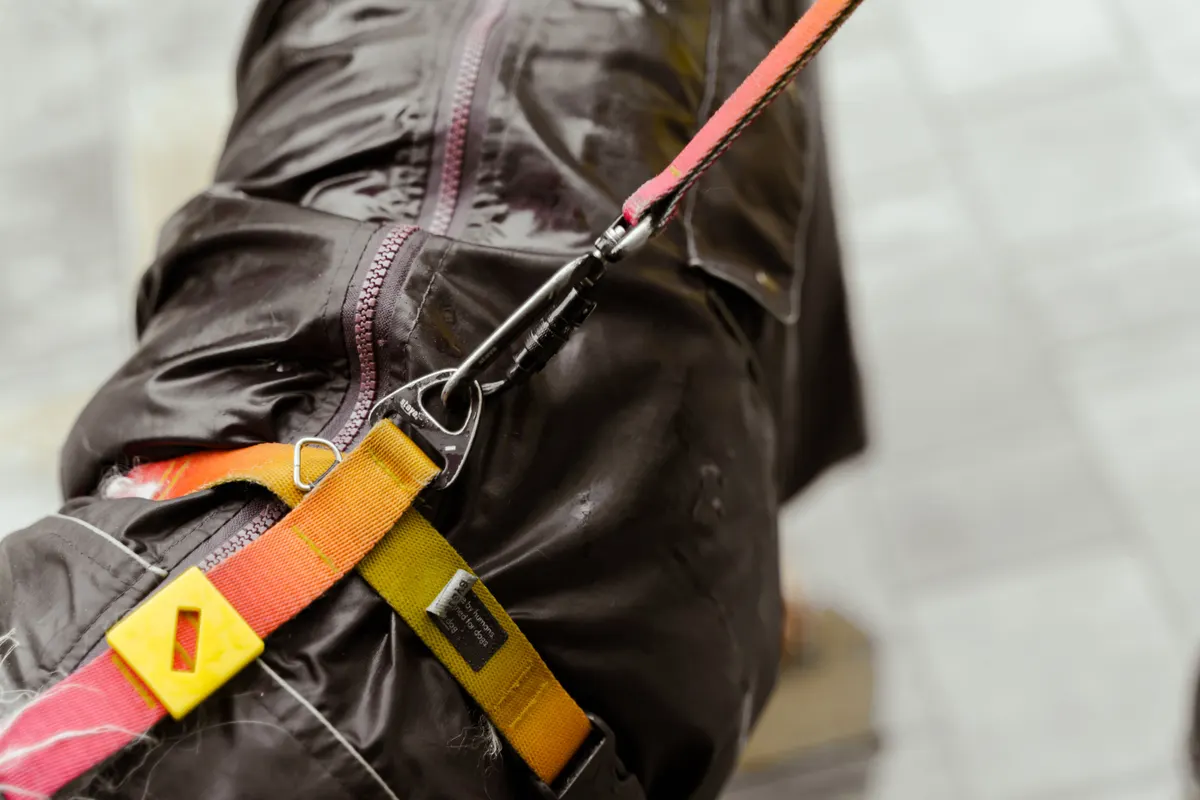
Here printing wins outright. A leash rack is a shape problem, and shape is what a printer is for.
You can make one that fits your door, your leads, your harness and your bag roll, which is not something you can buy.
- Screw into a stud or a proper wall anchor. A printed rack is stronger than the drywall behind it.
- Countersink the screw holes in the model, or the heads hold the rack off the wall.
- Hooks pointing slightly up, so a lead does not walk itself off.
- Print the rack with more walls rather than more infill. Walls carry the bending load.
Put the food scoop and the treat jar on the same wall and the whole entryway gets tidier. Our pet food storage guide covers the container that goes underneath it.
Designs are under the leash tag on Thingiverse.
Small Parts That Save A Whole Item
This is the quiet one, and it is the reason a printer earns its keep in a house with animals.
Pet gear gets condemned by one tiny broken part. A crate tray clip, a gate latch catch, a stroller wheel spacer, the plastic slider that keeps a collar’s tail flat.
None of those are sold separately. All of them are twenty minutes of printing.
- Collar keepers and slider loops in the exact width of your webbing.
- Poop bag holders that clip to your own leash handle.
- Crate tray retainers to stop a tray sliding out.
- Spacers and shims for a wobbly feeder or a gate that no longer latches square.
- Hose and tap adapters for the wash down bucket outside.
Measure the broken part with calipers, print it in a tough filament, keep the file. That is the mechanic’s version of this hobby and it is the part I would actually use.
Print Settings That Matter For Pet Parts
A model is only half the part. The other half is how you print it, and pet gear takes a beating that a desk ornament never sees.
Walls before infill. Bending load runs through the outside of a part, so extra perimeters do more for a leash hook than filling the middle with plastic.
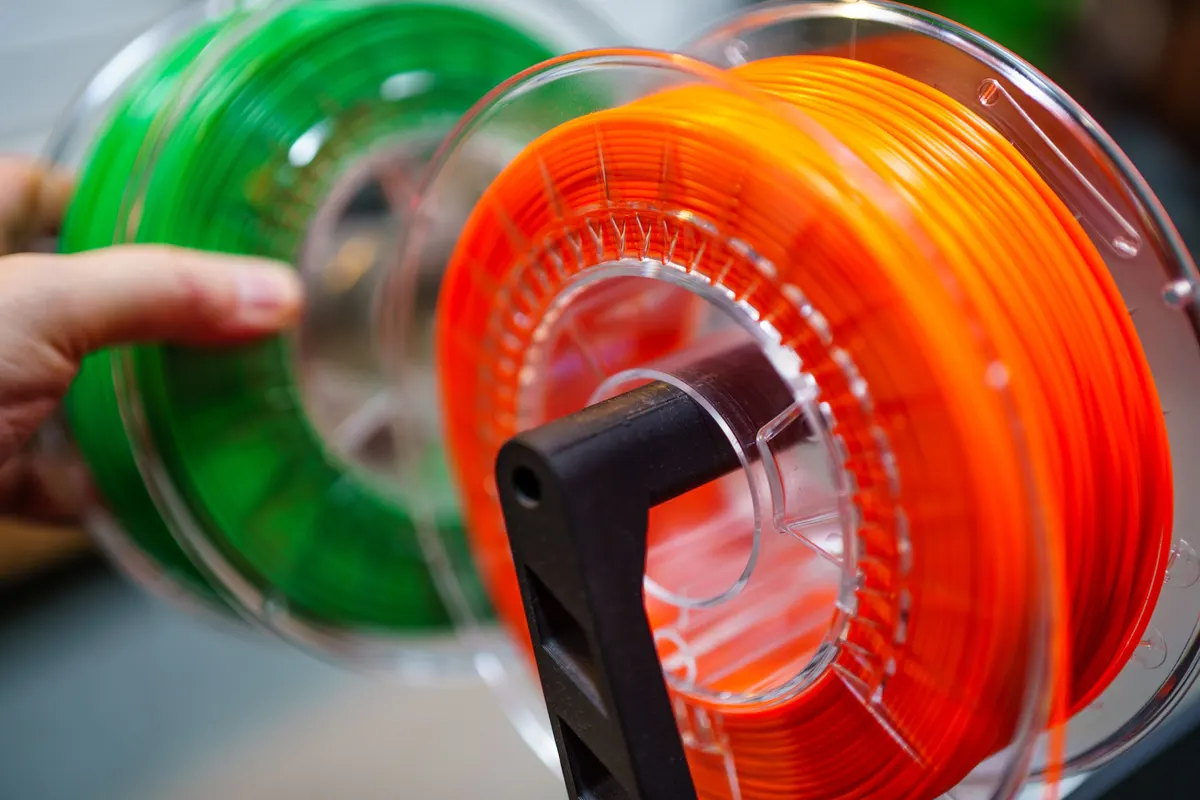
Print orientation is a strength decision. Layers split apart far more easily than they break across, so lay the part down so the load runs across the layers rather than trying to peel them.
- Thicker layers print faster and leave deeper grooves, which is worse anywhere a dog’s food or slobber goes.
- Anything screwed to a wall wants solid top and bottom layers around the holes.
- Leave a little clearance on any part that slides or clips. A printed part that fits perfectly on screen binds in your hand.
- Sand or file every edge that a dog’s nose will touch. A printed edge comes off the bed sharper than you expect.
Then test it before your dog does. Load it by hand until you are convinced, hang the heaviest lead on the hook, push the bowl stand sideways on the floor.
That is a five minute check that stops the failure happening while a dog is attached to the other end of it.
Filament, Food Contact And Chewing
Two safety points, and I am staying inside what I can point at.
Food contact is a regulated thing, and hobby filament is not automatically in it. The FDA maintains an inventory of cleared food contact substances. Unless a filament maker points you at that clearance for their material, treat a printed bowl as not food safe and use a stainless insert.
There is a second reason beyond the plastic itself. Printed parts are made of layer lines, those lines hold residue, and you cannot run them through a hot dishwasher cycle without warping them.
Heat is the other one. Plastic and desert heat have never got along in my experience, and the cheap plastic bowls I used to buy cracked in it. A printed part left in a hot car is in the same category, so keep printed accessories indoors.
On chewing, my own rule and not a health claim: nothing printed is a chew toy. Printed plastic breaks into hard edged pieces rather than tearing, so a printed item goes away the moment a dog starts working on it with their back teeth.
Where To Find The Files
Four sites hold nearly everything, and all four are free to browse.
- Thingiverse is the deepest back catalogue. The tag pages linked above are the fastest way in: the pet tag is a good browse.
- MakerWorld has the newest designs and profiles that are ready to print. Start at makerworld.com.
- Printables and Cults3D both carry large pet sections. Search their own sites by name.
Search terms that pull the good results: dog bowl stand, elevated feeder, dog tag, treat puzzle, slow feeder, leash holder, leash rack, collar keeper, poop bag holder.
Check the licence on anything you print for someone else. Most of these designs are shared for personal use, and a few are not, which the designer states on the model page.
Download the file and keep it. Models come down off these sites, and the one you liked will be the one that vanishes the week your first print fails.
Read the comments before you print. A model with fifty makes and photos is proven. A model with none is a drawing that has never been tested by anyone.
Best 3D Printed Dog Accessories FAQ
Are 3D printed dog bowls safe?
Treat them as not food safe. The FDA maintains the inventory of cleared food contact substances, and hobby filament is not in it unless the maker says so. Print the stand and drop a stainless bowl into it.
What filament should I use for dog accessories?
Choose by the job. A tougher filament for anything taking load or living outside, and the easy stuff for indoor racks and holders. Follow the filament maker’s own printing guidance, since every brand states its own settings.
Can a dog chew a 3D printed toy?
No. Printed parts break into hard edged pieces instead of tearing, so puzzles are supervised only and get binned at the first tooth mark.
Where can I find free dog STL files?
Thingiverse, MakerWorld, Printables and Cults3D all carry free pet designs. The Thingiverse tag pages for dog bowl stands, dog tags, dog toys and leashes are the quickest starting point.
Do 3D printed dog tags last?
Not as long as engraved metal. Print one flat so the layers cross the ring hole, use a metal split ring, and keep a metal tag on the collar as the real identification.
Do I need my own printer to get these?
No. Online print services and local makerspaces will print a file you send them, and many print shops list pet parts already. Send the same file you would have printed at home and ask for a tougher material if the part takes any load.
Is printing cheaper than buying dog accessories?
Only if you already own the printer. The real saving is the replacement part nobody sells, like a crate tray clip or a collar keeper, which turns a scrapped item back into a working one.
 Gunner Vance