
Reptile supplies come down to three things. A box big enough to walk across, a warm end and a cool end, and the right light over the top. Everything after that is decoration. Get those three right and the shopping list gets short fast.
This is the hub for reptile supplies on Pet Approves. What every enclosure needs first, then the deep guides for tortoises, bearded dragons, leopard geckos, snakes and the lights that sit over all of them.
The Best Turtle Tank Filter for 2026: 11 Picks by Tank Size
Eleven turtle tank filters, grouped by the gallon range each maker actually states, from a 290 GPH internal for a 75 gallon tank to a canister for the big setups.
Read the guide →Turtle Basking Platform: Best 11 Picks for 2026
Eleven turtle basking platforms compared on mounting, drainage and stated tank size. Floating, in-tank, hanging and above tank, and which one your turtle actually needs.
Read the guide →Best Leopard Gecko Tank 2026: My 10 Picks After a Research Day
I do not keep a leopard gecko, so this is a full research day plus what owners report. Ten tanks and enclosures from 20 to 50 gallons, ranked on floor space, front opening doors and locks, with a feature check table and my top three by price.
Read the guide →Best Snake Enclosure 2026: My 9 Picks After a Research Day
I do not keep a snake, so I spent a full research day on enclosures instead. Nine ranked for a ball python, for a 40 gallon upgrade, for composite versus glass and for a stand, with a nine column feature table, the escape routes owners actually report, and my top three by price.
Read the guide →Best UVB Light for Bearded Dragons 2026: My 11 Picks After a Research Day
I do not keep a bearded dragon, but my desert tortoise has lived under a UVB lamp for years and I have watched two of them fade. So I spent a day on every UVB light worth buying now. Eleven T5 fixtures, tubes and compact bulbs ranked, with a feature check table, what the makers say about T5 against compact, sizing for a 40 and a 120 gallon, and my top three.
Read the guide →Best Bearded Dragon Tank 2026: My 9 Picks After a Research Day
I do not keep a bearded dragon, so this is a full research day on every enclosure worth buying now plus what owners report living with each one. Nine tanks from 40 gallon starters up to a 230 gallon, a feature check table, front opening against top opening, PVC against glass, and my top three by price.
Read the guide →Best Tortoise Enclosure 2026: My 11 Picks After Keeping a Desert Tortoise
A desert tortoise walked into my yard in Henderson and never left. Eleven tortoise enclosures ranked after a full research day, covering indoor tortoise tables, outdoor houses, large builds and enclosures on wheels, with every published dimension in one feature table and my top three by price.
Read the guide →Jump to:
Reptile supplies every enclosure needs
Reptiles are ectotherms, which is why every care sheet in the box leads with temperature instead of bedding. A dog bed is furniture. A reptile enclosure is the animal’s weather, so reptile supplies get chosen around temperature first and looks last.
Floor space beats volume. Makers size glass tanks in gallons and PVC builds in inches. Keepers argue about gallons in every forum thread, and the argument always lands in the same place. Gallons measure volume, and a ground animal uses floor. Read the length and the width before the gallon number.
A warm end and a cool end. Every maker’s care sheet describes the same layout. Heat sits at one end, nothing sits at the other, and the animal walks between them and picks. A box heated end to end takes that choice away. Small enclosures make the gradient hard to build, which is the real reason keepers tell beginners to skip the minimum size.
UVB across the top. Bulb makers publish a replacement window in months and state plainly that the useful output fades long before the tube stops looking lit. Forum threads repeat that warning more than any other. The light is still on, the UVB is already gone.
Humidity that matches the animal. Arid species and tropical species want opposite boxes. A screen top vents moisture, which suits a desert setup and works against a humid one. Sealed PVC holds it in. Pick the box for the climate the animal came from, then measure with a gauge instead of guessing.
Starter kits are where the money leaks. A boxed kit puts a small tank, a clip lamp and a coil bulb in one carton at one price, and owner threads describe the same outcome over and over. The animal grows, the tank does not, and the second purchase is the real one. Buying the enclosure for the adult animal on day one is the single piece of advice keepers repeat most.
Note: a reptile vet answers everything about the animal, and the Merck Veterinary Manual reptile section is the reference I read before any page of reptile supplies here. This page is about the hardware, and every temperature, size and schedule below is the makers’ number or the keepers’ reported experience, not ours.
Glass, PVC or a table
The box is the biggest line on any reptile supplies list. Three builds cover almost every enclosure sold, and no comparison page seems to lay them side by side. Here they are.
| Build | Heat and humidity | Opens | Suits |
|---|---|---|---|
| Glass tank, screen top | Vents fast, holds little | Top, or front doors on newer models | Arid species, first setups, small animals |
| PVC panel enclosure | Holds heat and moisture well | Front, usually sliding or hinged | Humid species, adult snakes, big lizards |
| Open tortoise table | Room temperature, no lid to trap air | Open top, you reach in | Tortoises indoors |
Front opening against top opening is the other split, and it matters more than new keepers expect. A hand coming down from above reads as a bird to a ground animal. A door at eye level does not. Front opening also lets an enclosure sit on a stand at a sensible height rather than on the floor.
Glass shows the animal off and costs the least to start. PVC weighs less, holds a gradient with a smaller heat source, and takes a lock. Tortoise tables are the odd one out, because a tortoise indoors needs air and floor rather than a sealed box.
Think about cleaning before you buy. An enclosure gets emptied, wiped and refilled on a schedule for as long as you own the animal. A front door and a stand at waist height turn that into a ten minute job. A heavy glass tank on the floor with a screen lid on top turns it into a chore you put off, and putting it off is the part that shows.
Tortoise enclosures
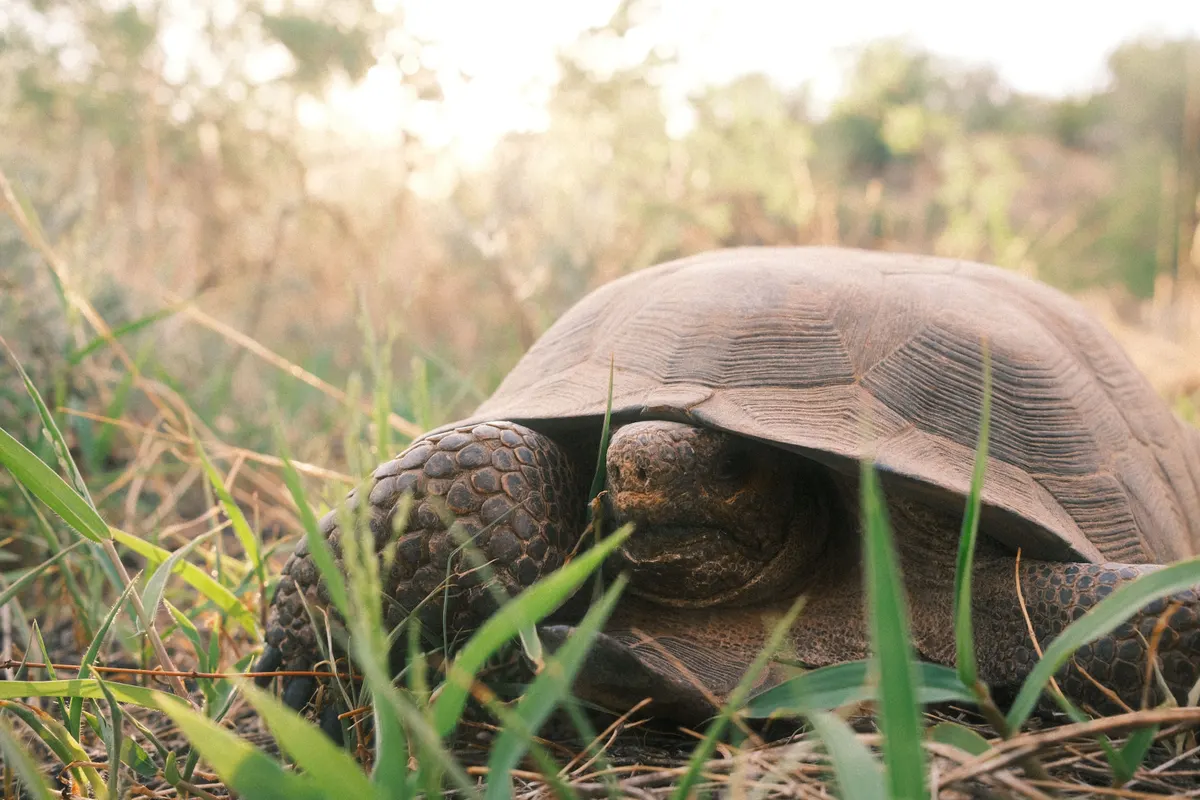
A desert tortoise found its way into our yard, and that is how I ended up in this category at all. He is the only reptile I keep, so this is the one section here written from my own years rather than a research day.
The first enclosure I built was a low wooden frame with a mesh lid. It held for a season. Then he climbed the corner where two walls met and walked out of it. Tortoises climb, and they dig, and an enclosure that only worries about the lid has two other exits.
The desert tortoise is a Mojave and Sonoran animal, so the outdoor pen has to give him dry ground, shade he can reach without help, and a burrow spot. Sunken walls solved the digging. Rounded corners with nothing to brace against solved the climbing.
Indoors is a different product. A tortoise table is an open topped box, wide and shallow, with a lamp over one end. Glass tanks trap the humid air an arid tortoise does not want, which is why the table exists at all, proof enough that the pet approves of the drier air it gives him instead. Large and walk-in builds are their own category once the animal grows.
Full guide: tortoise enclosures, indoor and outdoor.
Bearded dragon tanks
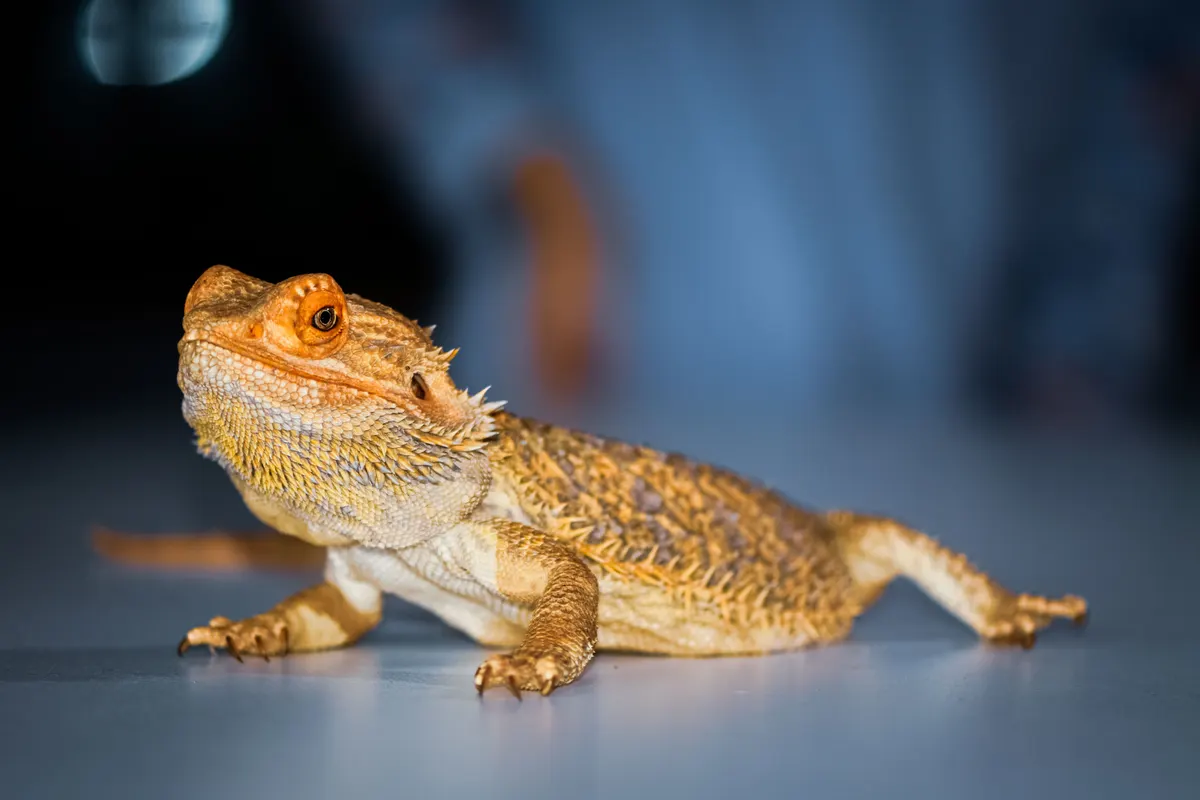
I have never kept a bearded dragon, and I am not going to pretend otherwise. What I did was spend a day in maker specs and owner threads, the same way I do for any product I do not own myself.
The size ladder is the whole conversation. Owners describe it in three steps. A forty gallon tank for a young dragon, seventy five for a growing one, one hundred twenty for an adult with room to move. Sellers list starter kits at the bottom of that ladder, and the threads are full of people who bought twice.
A tank that long makes the warm end and cool end easy, which is the point. The gradient the care sheets describe is hard to build in a short box and simple in a long one.
Front opening against top opening comes up constantly here, and PVC against glass right behind it. Glass is the cheaper start. PVC holds the gradient with less wattage and takes a stand. Either way, the tank is bought for the adult animal, not the one in the shop.
Full guide: bearded dragon tanks by size.
Leopard gecko tanks
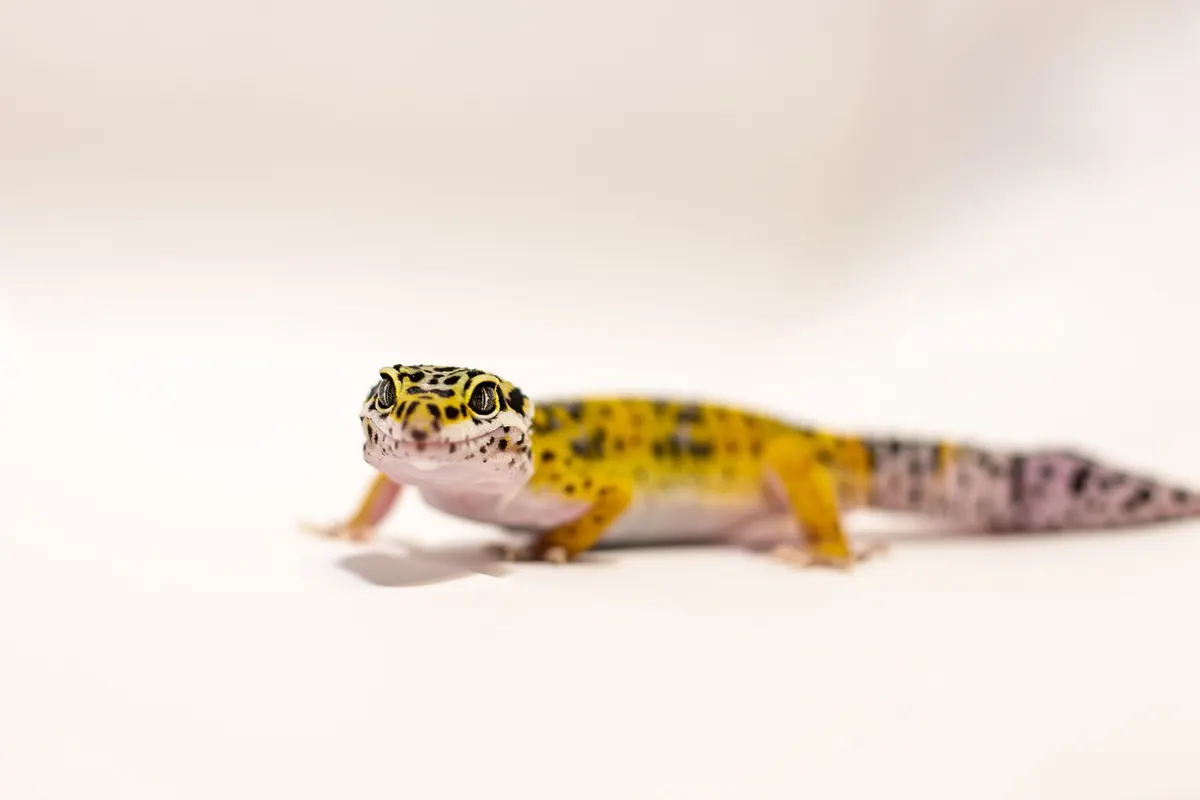
Another animal I do not keep. Leopard geckos take a smaller box than a dragon, which is most of why they get recommended to first-time keepers.
Twenty gallon long or forty gallon breeder is the ladder owners describe, and the word long matters more than the number. A gecko walks the floor rather than climbing, so a tall tank sells volume the animal will never use.
Hides are not decoration here. Keepers describe three: one at the warm end, one at the cool end, and a humid hide in the middle with damp moss in it. That third one comes up in every thread about a gecko struggling to shed, evidence that the pet approves of the extra humidity right when it needs it.
Front opening tanks are the upgrade owners mention most, for the same reason as with dragons. A door beats a hand reaching down over a small ground animal.
Full guide: leopard gecko tanks and hides.
Snake enclosures
I do not keep snakes either, and this is the category where that matters most, because the buying advice here is unusually specific and comes almost entirely from keepers.
PVC dominates. Snake keepers describe glass as the thing they started with and PVC as the thing they moved to. Sealed panels hold humidity that a screen top vents, and a ball python is the animal that argument is usually about.
Escape proofing is a real product feature, not a marketing line. Snakes push. Keepers talk about latching doors, lock points and the gap around a sliding panel the way other people talk about mattress thickness. A lid that merely sits on top is the failure everyone has a story about.
Size follows the animal’s length, not a gallon figure. Keepers describe a forty gallon footprint as the common step up for a growing ball python and talk in inches of floor length after that. Large constrictors move into custom builds entirely. The rule they repeat is that the snake should be able to stretch out along one side without folding.
Stands are the other snake-specific item. A long enclosure on a matching stand puts the door at chest height and keeps the floor clear, and racks are where keepers with several animals end up.
Full guide: snake enclosures, PVC and glass.
The light question
Lighting confuses more first-time buyers than any other part of the reptile supplies list, because two different jobs get sold in similar looking boxes.
Heat and UVB are separate. A heat lamp makes the basking spot. A UVB tube covers the length of the enclosure. Makers describe them as two products doing two jobs, and a fixture that claims both is worth reading closely before it goes in the cart.
T5 against T8 against compact is the specification argument. Makers publish output and distance figures for each, and the short version keepers repeat is that a linear tube covers a gradient and a coil in one corner does not.
The bulb is a consumable. This is the part worth writing on a calendar. Makers state a replacement window in months, and the tube keeps producing visible light well past it. Nothing about the enclosure looks different on the day the UVB stops mattering, which is exactly why it gets missed.
What watt is the question people arrive with, and it belongs to the heat lamp rather than the UVB tube. Wattage makes the basking spot hotter or cooler, and the right figure depends on the size of the enclosure and the room it sits in. Makers publish distance and wattage tables for their own fixtures, and a thermometer at the basking spot settles it faster than any thread.
Fixture length is the last piece. A tube much shorter than the enclosure lights one end and leaves the rest dark, so the fixture gets sized to the tank rather than to the bulb on the shelf.
Full guide: UVB lights for bearded dragons.
Reptile supplies buying order for a first setup
Buy reptile supplies in this order and you buy each thing once.
- The enclosure, sized for the adult animal. Everything else is chosen to fit it, so it cannot be the thing you fit around a lamp you already own.
- Heat, at one end only. The gradient is built here or it is not built at all.
- A UVB fixture as long as the enclosure. Length first, then the tube that fits the fixture.
- Two thermometers and a humidity gauge. One reading at the warm end, one at the cool end. Guessing is how the gradient quietly disappears.
- Substrate for the species, arid or humid, deep enough to dig in if the animal digs.
- Hides at both ends, plus a humid one for the species that need it.
- Decoration last. Branches, plants and backgrounds are the fun part and they change nothing about whether the setup works.
Reptile supplies share a house with everything else you own. The dog beds guide, the cat trees guide and the pet cleaning supplies guide are the sibling hubs.
Reptile supplies questions, answered
What reptile supplies do you need?
The reptile supplies list is short. An enclosure sized for the adult animal, a heat source at one end, a UVB fixture running the length, thermometers, a humidity gauge, substrate and hides. Decoration after all of that.
What size enclosure do reptile supplies have to fit?
Read floor length and width rather than gallons. Owners describe forty to one hundred twenty gallons for a bearded dragon by age, twenty long to forty breeder for a leopard gecko, and a wide open table for a tortoise indoors.
Do all reptiles need UVB?
Makers and care sheets treat it as standard for basking species like tortoises and bearded dragons, and the requirement is written on the packaging. Ask a reptile vet about your specific animal rather than a forum.
Glass or PVC for reptile supplies?
Glass costs less to start and shows the animal off. PVC holds heat and humidity with a smaller heat source, weighs less, and takes a lock. Humid species and adult snakes are where keepers move to PVC.
How often do you replace a UVB bulb?
Whatever window the maker prints, and the tube will still look fine on that day. Write the date on the fixture with a marker, because nothing visible tells you it has passed.
Can two reptiles share an enclosure?
Most care sheets for the species covered here are written for one animal per enclosure, and keepers who try otherwise report trouble over food and basking spots. It is a question for a reptile vet or a breeder, not a shopping decision.
 Gunner Vance