
Does music help dogs with anxiety? Yes, modestly, and the effect is short lived. Research from the University of Glasgow with the Scottish SPCA measured lower stress in kennelled dogs when music was played, with reggae and soft rock doing best. Dogs stopped responding within a day, so the trick is variety, not one playlist on repeat.
I am Gunner. I have an English Mastiff, a group of barn cats, two rescue rabbits and a desert tortoise, and I live in Henderson, Nevada, where the first week of July is loud.
I spent years as a mechanic before I built this site, so I am used to asking whether a thing actually does what it claims. Music for dogs is one of the few calming ideas with real research behind it, and the research is more interesting than the marketing.

Part of our dog anxiety products guide.
Jump to:
- Does music help dogs with anxiety? The short answer
- What the Glasgow and Scottish SPCA study measured
- The genres that moved the needle
- Why the effect fades
- How to play it so it helps
- Fireworks season, storms and being left alone
- Does music help dogs with anxiety in the car?
- Does music help dogs with anxiety at the vet or the groomer?
- What music will not fix
- FAQ
Does Music Help Dogs With Anxiety? The Short Answer
Music is a real, small, temporary help. It is not a treatment and it is not a substitute for a vet.
What it does well is cover the noise that starts the problem. A dog who cannot hear the fireworks two streets over has less to react to.
What it does badly is hold. Dogs habituate, which is a polite way of saying they stop noticing, and the calming effect drops off fast.
- Best case, a dog settles sooner and stays settled through a noisy evening.
- Realistic case, music takes the edge off and something else does the rest.
- Worst case, it does nothing, because the dog’s problem is not noise.
That is the whole honest picture. The rest of this page is the research it comes from and how to use it.
So when somebody asks does music help dogs with anxiety, the useful reply is yes, a little, for a while, and only alongside everything else.
What The Glasgow And Scottish SPCA Study Measured
This is the study everybody half-remembers, so it is worth saying what it actually did.
Researchers at the University of Glasgow worked with the Scottish SPCA and played five genres to dogs in a rescue kennel. The paper, The effect of different genres of music on the stress levels of kennelled dogs, was published in Physiology and Behavior in 2017.
They did not ask the dogs. They measured behaviour and physiological stress markers, including heart rate variability and how much time dogs spent standing versus lying down.
An earlier paper from the same group, ‘Four Seasons’ in an animal rescue centre, found that classical music reduced stress in the same setting.
- The subjects were kennelled shelter dogs, which are already under more stress than a dog on your sofa.
- The exposure was short, a matter of days, not weeks.
- The finding is about a group average, not a promise about your dog.
That last point matters. A study can find a real effect across a kennel and still miss the one dog who does not care about music at all.
The research answers does music help dogs with anxiety for a shelter kennel. It does not answer it for your living room, and honest reading keeps that line visible.
The Genres That Moved The Needle
The 2017 paper is the reason you keep seeing reggae recommended for dogs, which sounds like a joke until you read it.
Reggae is the headline, but does music help dogs with anxiety is really a question about tempo rather than about a genre.
Reggae and soft rock came out ahead of the other genres tested for reducing signs of stress. Classical had already shown an effect in the earlier work.
The more useful reading is not “play reggae”. It is that steady tempo and low complexity seem to be doing the work, and several genres deliver that.
- Slow, even tempo, roughly in the range of a resting heart rate
- Few sudden dynamic jumps, so nothing startles
- Simple arrangements rather than dense ones
- Consistent volume, which rules out most film scores
Individual dogs differed in the study, which is the honest caveat nobody quotes. Watch your own dog and let that outrank any genre list, including this one.
Genre is the smallest part of does music help dogs with anxiety. Tempo, volume and timing do more work than the label on the playlist.

Why The Effect Fades
This is the part the playlists leave out, and it is the single most useful thing on this page.
In the kennel work, the calming effect was strongest at the start and faded within about a day of the same music playing. The dogs got used to it.
So the practical rule is rotate, and save it.
- Change the genre every day rather than looping one playlist.
- Do not run it all day, every day, or it becomes background and stops registering.
- Keep one specific sound for the hard nights so it still means something.
I treat it the way I treat a good tool. Using it constantly is how it stops working when you need it.
Habituation is the reason does music help dogs with anxiety has a different answer in week one than in week four.
How To Play It So It Helps
The setup matters more than the song choice, and most people get the volume wrong in both directions.
Volume sits just above the noise you are covering, and no higher. Dogs hear far more than we do, and loud music is another stressor, not a solution.
Start before the trigger, not during it. Music turned on after the first firework is already behind.
- Put the speaker in the room the dog retreats to, not the room you are in.
- Start thirty to sixty minutes before the noise, or before you leave the house.
- Use something that will not stop, buffer or play an advert at full volume.
- Pair it with a safe space: a covered crate, an interior room, curtains closed.
- Leave a chew or a stuffed toy so the dog has a job.
A cheap speaker in the right room beats an expensive one in the wrong room. That is true of most gear.
The other half of the setup is what you do while it plays. Behave as though nothing is happening. A dog reads the room off you, and hovering over a frightened dog confirms that something is worth being frightened of.
Comforting a scared dog does not reward the fear, which is an old myth. Sit down, stay ordinary, and let the dog come to you or go to its safe space, the one the pet approves without any coaxing.
Watch what the dog actually does rather than whether the music sounds calming to you. The signals worth counting are simple:
- Lying down and staying down, rather than pacing or standing
- Panting that slows once the dog has settled in a cool room
- Ears and tail loosening, and the body unclenching
- Taking a treat, because a truly panicked dog will not eat
If none of that shifts across two or three noisy evenings, the music is not the tool for this dog and it is worth saying so rather than turning it up.
Your own dog settles the question of does music help dogs with anxiety faster than any article, mine included.
Fireworks Season, Storms And Being Left Alone
Searches for calming music for dogs climb through the summer and spike in early July. That is fireworks, and it is the most predictable stressful night of the year.
Prepare for that week rather than that evening. Anything you plan to use should be familiar to the dog days beforehand, so the pet approves of the routine before fireworks start.
- Walk early, before it gets dark and before anything starts.
- Close windows and curtains, which cuts both the sound and the flashes.
- Have the music on before dusk.
- Check the microchip details and the collar tag, because escapes peak that night.
Fireworks night is the honest test of does music help dogs with anxiety, because everything else you tried has already failed by then.
Pressure wraps are the other tool people reach for on those nights, and our dog anxiety vest guide covers how they fit and which dogs they suit. Storms bring the same problem with less warning, so whatever you set up for July is worth leaving ready.
Fireworks week is when most owners first ask does music help dogs with anxiety, and it is the worst week to be testing something new.
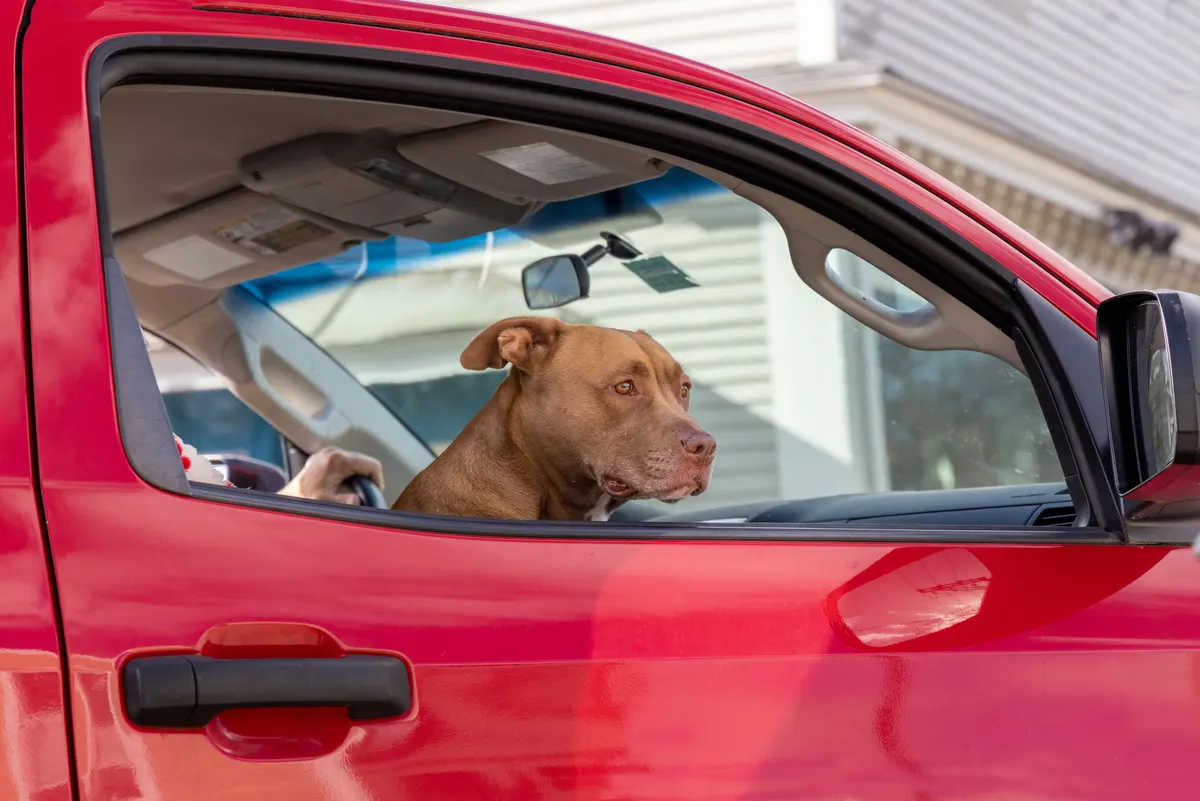
Does Music Help Dogs With Anxiety in the Car?
Straight answer first. No study I can point to tested music on dogs in cars, so anything here is reasoning and setup, not research.
What the car has in common with the kennel is unpredictable noise, and that is the part music covers well. Road roar, indicators, other traffic and the door slam all arrive without warning.
What the car adds is motion, and music does nothing at all for that. A dog that drools, yawns repeatedly or vomits on short trips is showing motion sickness, and that is a vet conversation rather than a playlist problem.
- Start the music before the dog gets in, not once you pull away.
- Keep the volume low. A car is a small hard box and it is louder than your living room already.
- Crack a window for airflow rather than turning the stereo up over the road noise.
- Use the same sound on short happy trips, so it does not only mean the vet.
Secure the dog first. A loose dog in a moving car is a safety problem that no amount of reggae improves, and a crate or a harness comes before any of this. Our dog carrier guide covers travel crates, car seats and ramps.
My honest read is that music in the car is worth trying and easy to overrate. If the dog is fine on a ten minute drive and falls apart on an hour, the problem is the hour, not the soundtrack.
Does Music Help Dogs With Anxiety at the Vet or the Groomer?
This is the closest real-world match to the research, because a clinic waiting room and a kennel share the same problem: strange noise, strange smells and no way out.
Plenty of clinics already play music in the ward for exactly that reason. What you control is the twenty minutes before you walk in and the wait itself.
- Play the sound in the car on the way, so the dog arrives with something familiar running.
- Ask whether you can wait outside or in the car and be called in. Most clinics say yes.
- Bring one earbud-free speaker or just your phone at low volume for the waiting room.
- Take treats that outrank fear, because a dog that will eat is a dog that is coping.
Do not let the music replace the preparation. A calm visit is mostly logistics, and our guide to what to bring to a vet appointment covers the packing that makes the visit shorter.
One caution worth stating plainly. If a dog has become fearful at the vet recently when it never used to be, that is a change worth raising, and our guide to the signs your dog needs to go to the vet covers the behaviour changes that get an appointment. Pain and fear look alike from the outside.
What Music Will Not Fix
Music is a comfort layer. It does not touch the cause, and there are cases where reaching for a playlist is the wrong move.
Pain looks like anxiety. A dog who has suddenly become clingy, restless or snappy needs a vet before it needs a speaker, and our guide to the signs your dog needs to go to the vet covers which changes get an appointment.
Separation anxiety is a training problem with a behavioural fix. Music helps around the edges of it and will not resolve it on its own.
- Sudden behaviour change in an adult dog, see a vet first.
- Destruction, self-injury or house soiling when alone, ask about a behaviourist.
- Panic that does not respond to anything, ask your vet about medication.
Calming chews are the other thing owners try alongside music, and our calming treats guide goes through what is in them. Treat both as support, not as treatment.
Asking does music help dogs with anxiety is worth doing only after pain and training have been ruled out.

FAQ
What music calms dogs’ anxiety?
Reggae and soft rock performed best in the Glasgow and Scottish SPCA work, and classical showed an effect in their earlier study. The common thread is a slow, steady tempo with no sudden jumps in volume. Rotate between them rather than looping one.
Does dog anxiety music actually work?
It produced a measurable drop in stress indicators in kennelled dogs, so yes, with limits. The effect was modest, it varied between individual dogs, and it faded within roughly a day of the same music. Treat it as one layer of a plan.
What is the 3-3-3 rule?
It is a rescue guideline, not a music one. Three days to decompress, three weeks to start settling into a routine, three months to feel at home. It is a rough expectation setter for a newly adopted dog, and calming music belongs in that first stretch.
People often ask about the 3-3-3 rule and does music help dogs with anxiety in the same breath, because both belong to a newly adopted dog.
Why does my dog panic when I leave?
Usually separation related behaviour, sometimes noise, sometimes pain. The tell is whether it happens only when you go, or also when you are home. Film it if you can, because your vet or a behaviourist will ask, and music alone will not answer it.
Separation is where does music help dogs with anxiety gets oversold hardest, so watch what the dog does rather than what the playlist promises.
Is there free calming music for dogs?
Plenty, on the major streaming services and video platforms. Two cautions. Pick something that will not play a loud advert into a quiet room, and do not leave the same track looping every day, because that is exactly the pattern the research says stops working.
Free tracks answer does music help dogs with anxiety just as well as paid ones, provided nothing interrupts them.
Does it work for cats too?
Cats respond better to music written for cat hearing ranges than to human music, which is a different body of research. My barn cats ignore anything I put on. If you want to try it with a cat, use cat-specific tracks rather than a dog playlist.
Does music help dogs with anxiety is a dog question, and cats need their own research and their own tracks.
 Gunner Vance