
Horse supplies are the most expensive list in this whole site. A horse eats every day, wears out gear every season, and needs its feet handled by a professional all year. Nothing else on Pet Approves comes close.
I do not keep horses. I keep dogs, cats, rescue rabbits and a desert tortoise, and I am not going to pretend otherwise. So this hub is a research day plus a mechanic’s eye on the hardware, and it hands the buying decisions to the guides where owners did the proving.
This is the horse supplies hub on Pet Approves. Fly season first, because that is what most people search in summer, then water, feet, coat, blankets and the barn itself. Each section hands off to the deep guide or, where we have not written one yet, to plain advice.
The Best Horse Fly Sheet in 2026: My 10 Picks
I do not keep horses, so I spent a research day on fly sheets instead. Ten picks compared on mesh weave, belly bands, neck covers, UV figures and the hardware that holds them on.
Read the guide →Best Horse Fly Spray 2026: 11 Picks After Reading Every Label
Eight of eleven horse fly spray labels never name an active ingredient. I read all of them. Eleven sprays ranked on what the maker actually states, natural versus chemical, a feature check table and my top three by price.
Read the guide →Best Horse Fly Mask 2026: My 11 Picks After a Research Day
I do not keep horses, so this page is a full research day plus what owners report. Eleven horse fly masks ranked, with ears and without, a feature check table of what each maker actually prints, sizing by breed, and my top three by price.
Read the guide →Jump to:
- Horse supplies, the barn list before the tack list
- Fly masks, the physical barrier
- Fly spray, the layer that moves with the horse
- Fly sheets, coverage for the whole body
- Water, troughs, buckets and tank heaters
- Hoof care between farrier visits
- The grooming kit
- Blankets and turnout
- Stable and pasture management
- Horse supplies to buy first, in order
- Horse supplies questions, answered
Horse supplies, the barn list before the tack list
Search for horse supplies and a lot of what comes back is model horses and playsets, so to be clear, every one of the horse supplies on this page is for an animal you feed.
Horse supplies split into three buckets, and they behave completely differently. Daily chore gear you rebuy forever. Seasonal gear you replace on a cycle. Tack you buy once and keep for years if you buy well.
The chore bucket is water, hay, feed, bedding and muck gear. It is unglamorous, it never stops, and it is where the real money goes. Nobody writes a review of a muck bucket, and everybody owns one.
The seasonal bucket is fly gear in summer and blankets in winter. These are the horse supplies with a clear buying season, and they are where a bad purchase shows up fastest, because a mask that does not fit is visible from the fence line.
Tack is the third bucket and the one people research hardest. Saddle, pad, bridle, girth, boots. It is also the bucket where fit matters more than any feature, so it belongs with a saddle fitter rather than with a comparison table.
The horse supplies list below runs in the order a new owner actually hits the problems. Flies first, since that is the season most people arrive here in, then the things that run all year.
For general care questions that sit outside gear, the Merck Veterinary Manual horse owner section is the reference we point to. We review equipment. We do not give veterinary advice, and neither should any gear site.
| What you are solving | What it needs most | Guide |
|---|---|---|
| Flies at the eyes and face | Mesh that holds its shape off the eye | Fly mask |
| Flies over the whole body | A repellent that survives sweat | Fly spray |
| All day turnout in fly season | Full body coverage that breathes | Fly sheet |
| Water in freezing weather | A trough and a tank heater | Below |
| Feet between farrier visits | A pick, a stiff brush, a routine | Below |
| Coat, mane and tail | A grooming kit you keep in reach | Below |
| Cold, wet or windy turnout | A turnout blanket rated for the weather | Below |
Fly masks, the physical barrier
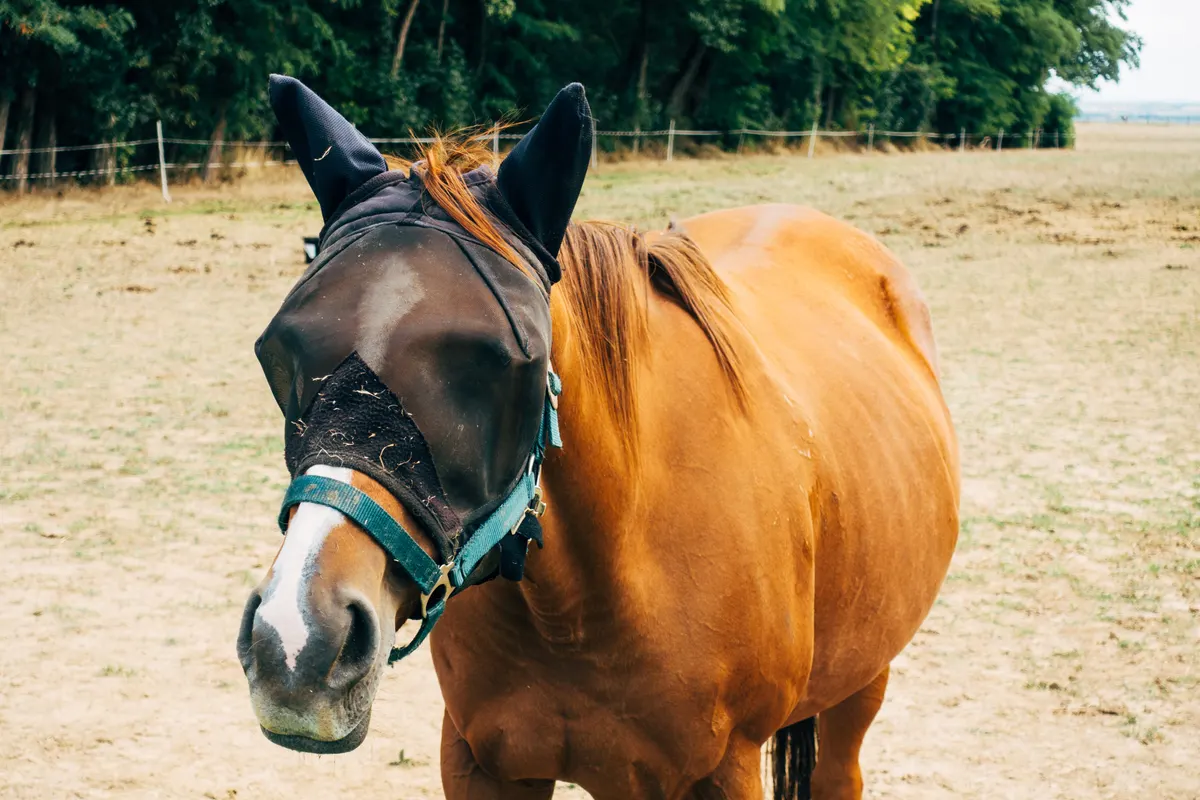
A fly mask is a barrier, not a repellent. It is mesh between the flies and the eyes, and it is the one piece of fly gear that works with no chemistry at all.
The fit question owners raise most is whether the mesh sits off the eye. A mask that presses the mesh onto the lashes rubs, and the horse then rubs the mask off on a fence post. Darts and a moulded shape hold the mesh forward. Try any new mask on before turnout and watch whether the pet approves the fit around the eyes.
Ears or no ears is the second question. Ear covers add coverage for horses that get bothered around the ears, and they add another thing to fit. Some horses accept them straight away and some never do.
The hardware is what my mechanic’s eye goes to first. A fly mask lives outdoors, gets soaked, gets rolled on and gets pulled through a gate. Few horse supplies take that much abuse for the money, and the seam binding, the fastener and the edge stitching are what fail, not the mesh.
Owners report the same failure order: the fastener lets go, then the binding frays, then the mesh tears at the seam. So a wide fastener with plenty of surface and a bound edge rather than a raw cut edge is the buy that lasts a second season.
On UV, read the maker’s own wording carefully. Some masks state a UV blocking percentage for the mesh and some do not claim it at all. Take the number as the maker’s claim about the fabric, not as a health promise about the horse.
The horse fly mask guide is the deep version of this section. It ranks eleven masks, splits them by ears and no ears, covers sizing by breed, and names the cheap stretchy mask it lists without recommending.
Fly spray, the layer that moves with the horse
Fly spray covers the body the mask cannot reach. Legs, belly, flank, shoulders. It is also the only fly product in this list that is a registered pesticide, and that changes how we write about it.
We print what the label states and nothing else. No mixing instruction, no dilution, no application frequency, no claim about which insects it handles. The label on the bottle is the legal document, and it beats any advice on a website including this one.
What we can talk about is the buying decision. Sweat resistance is the split that matters most. A spray for a horse standing in a paddock is a different product from one for a horse in work, and owners are clear that the second is worth paying for.
Natural and chemical is the other split. The plant oil sprays tend to need reapplying more often by their own labels, and the owners who use them accept that trade for the ingredient list. Neither camp is wrong, and both are on the shelf for a reason.
Format is a quiet cost decision. A barn with several horses buys gallons or a concentrate and refills bottles, and a single horse owner buys ready to use. The per-use difference over a summer is the largest in any horse supplies category.
Patch test anything new. Owners with thin skinned or clipped horses say this every time, and the makers say it on the label too. It costs a day and saves a reaction on the whole body.
The horse fly spray guide goes through the sweat resistant sprays, the gallon buys for a full barn, the concentrates, the natural options and the ones aimed at sensitive skin, with the label’s own wording on how each is applied.
Fly sheets, coverage for the whole body
A fly sheet is the all day answer. It is mesh over the whole horse, it does not wear off at midday, and for a horse turned out from morning to night it does more than a spray reapplied twice.
Coverage is the buying decision. A standard neck sheet covers the body. A detachable neck cover extends it up the neck for horses that get hit there. A belly wrap closes the gap underneath, which is where owners say the worst of it happens.
Then breathability. A sheet that traps heat is a sheet the horse sweats under, which defeats the point in a hot climate. Open weave mesh and a light colour are what owners in hot states reach for.
The hardware repeats the fly mask lesson. Surcingles, leg straps, chest closures and the shoulder seam are the failure points, not the fabric. Look at the stitching at the strap anchors, because that is the joint carrying the load when a horse rolls.
Fit runs on blanket sizing, measured along the horse rather than guessed. A sheet that is too big slides and rubs the shoulder, and one that is too small binds at the chest. Both end up in the tack room unused, which is how most horse supplies get wasted.
The horse fly sheet guide compares detachable neck models, standard neck sheets with a belly wrap, and the light mesh and scrim sheets, with sizing and washing straight from the makers.
Note: the three fly products are not competing purchases. Owners in a bad fly region run all three, because the mask handles the eyes, the sheet handles the body, and the spray covers the legs and everything the sheet leaves out.
Water, troughs, buckets and tank heaters
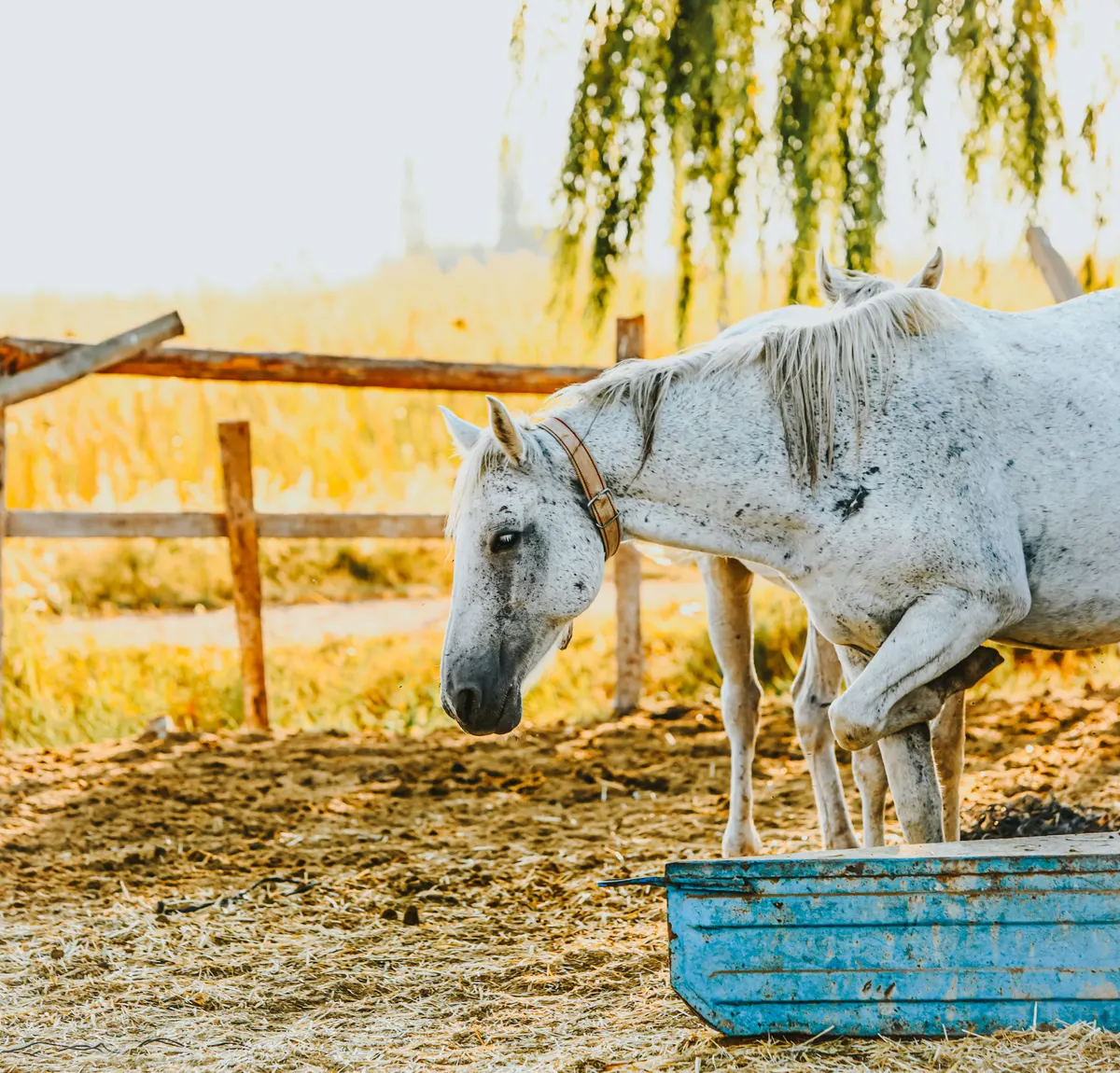
Water is the top line on every horse care sheet published. The Merck Veterinary Manual on equine nutritional requirements treats water as a nutrient in its own right, and no piece of gear on this page matters more than getting it in front of the horse.
Volume is the first decision. A horse drinks a lot and a paddock in summer drinks faster than you expect, so owners size the trough for a hot day rather than an average one.
Material is the second. Galvanised steel takes a beating and holds up to sun. Poly troughs are lighter, cheaper and easier to move, and they are the ones that go brittle and split after a few seasons in strong sun. I watched exactly that happen to plastic gear in the Nevada desert, and horses do not treat a trough gently.
Then freezing, which is where the money goes in cold states. A tank heater or a heated bucket keeps water drinkable when the surface would otherwise ice over, and owners in northern states treat it as a required purchase rather than an upgrade.
Read the maker’s instructions on any heated equipment and follow them exactly. Grounding, cord routing, and whether the unit is rated for a metal or a poly tank are all stated by the maker, and we will not print an electrical opinion of our own.
The unglamorous part is cleaning. Troughs grow algae in warm weather, so a scrub brush that lives at the trough and a drain plug you can actually reach save more time over a summer than any feature on the box.
Buckets are the other half of the setup. Stall buckets, a spare for the trailer, and a couple more than you think you need, because they crack and they get stepped on. Troughs and buckets are the horse supplies we have not written a deep guide for yet, so treat this section as the advice and check back.
Hoof care between farrier visits
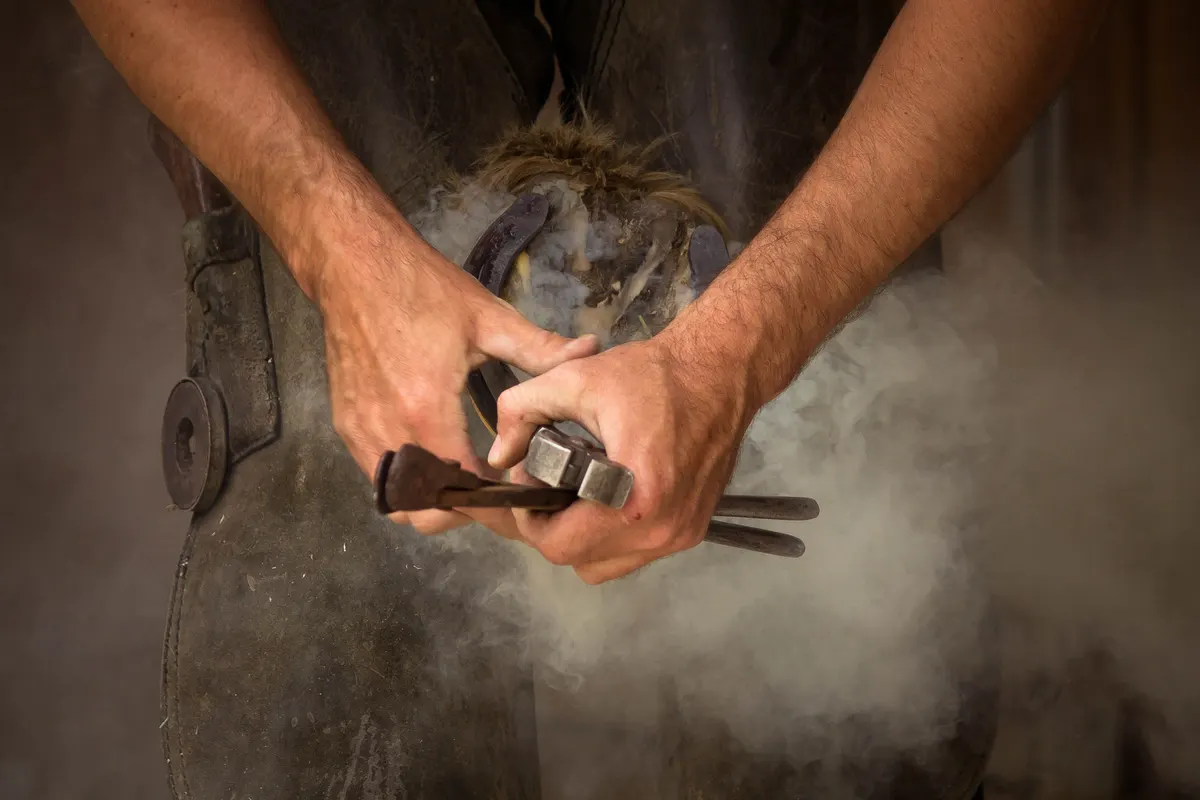
Hoof care is a professional job with a daily habit attached. The farrier trims and shoes on a cycle. What you own is the kit for every other day, and the discipline to use it.
The hoof pick is the whole beginning of the list. A pick with a stiff brush on the back clears the packed material and then sweeps the sole clean, which is the difference between looking at the foot and actually seeing it.
Buy a metal pick with a real handle. The thin stamped picks bend at the hook, and a bent hook slips off the sole. This is a two dollar decision that people redo three times.
Hoof dressings and hardeners are a maker claim category. Products state that they condition, seal moisture or harden the hoof wall. Take those as the maker’s wording, and take the question of whether your horse needs one to your farrier or your vet.
The American Association of Equine Practitioners publishes owner guidance on foot care and on the farrier relationship, and that is the source to use rather than a product page.
Storage is the practical bit. The pick that lives clipped by the stall door gets used, and the one in a tote in the tack room does not. Same rule as the hand vacuum by a rabbit pen, and same result.
Hoof care is on our horse supplies list to cover properly and is not written yet, so this section is advice with no product picks behind it.
The grooming kit
Grooming is the cheapest horse supplies category and the one that does the most work. It is also the daily hands on time where owners notice a problem while it is still small.
The core kit is short. A curry comb to lift dirt out of the coat, a stiff brush to flick it off, a soft brush to finish, a mane and tail comb, and the hoof pick from the section above.
Curry combs come in rubber and in flexible plastic. Owners with sensitive horses go softer, and owners with a horse that rolls in mud daily go firmer. There is no single right answer, which is why most tack rooms have two.
Bristles are where the price difference shows. Natural bristle brushes hold up longer and move more dust than the cheap synthetic ones, and the cheap brush shedding its own bristles into the coat is a complaint you see constantly.
A tote to hold it all matters more than it sounds. A kit spread across a tack room does not get used, and a kit in one carry tote goes to the stall every time.
Detanglers, shampoos and coat sprays are the extras. Buy them after the core five, and read the label rather than the front of the bottle for what each one is actually for.
We have not published a horse grooming guide yet. When we do it slots in right here.
Blankets and turnout
Blanketing is the horse supplies decision with the strongest opinions attached. Owners disagree about whether a healthy horse with a winter coat needs one at all, and the honest answer is that it depends on the horse, the clip and the climate.
What we can lay out is the vocabulary, because the labels are confusing until someone explains them.
A turnout blanket is waterproof and made for outdoors. A stable blanket is not waterproof and is made for indoors. A sheet is unlined. A blanket has fill, and the fill weight in grams is what separates light, medium and heavy.
Denier is the outer fabric toughness number. A higher denier outer takes more abuse from turnout, fencing and pasture mates, and it is the spec worth reading on a horse that is hard on gear.
Fit follows the same measurement as the fly sheet, so if you sized a sheet correctly you already know the number. Shoulder gussets and a tail flap are the features owners name for movement and coverage. Give it a few days and see whether the pet approves the fit before you rely on it through a hard winter.
The real cost is that a blanketed horse needs the blanket managed. On, off, checked for rubs, dried out when it gets soaked. That is a daily commitment, not a purchase, and it is the part people underestimate.
Whether to blanket at all is a conversation for your vet and your own eyes on the horse. We are a gear site and we are not going to answer it for you. A horse blanket guide is planned and not written yet.
Stable and pasture management
The barn is where horse supplies stop being products and start being systems. Muck gear, storage, fencing and the daily routine that ties them together.
Muck first, because it is the most frequent job on the property. A fork with tines that do not snap, a cart or a wheelbarrow that rolls loaded over uneven ground, and somewhere to put the pile that is not next to the water.
The cheap wheelbarrow is a false economy and owners say so loudly. A loaded muck cart on rough ground kills thin axles and single wheels, so a two wheel cart or a heavy frame is the buy that survives.
Hay storage is the biggest recurring cost you can actually control. Hay stored off the ground and under cover keeps. Hay stacked on bare dirt in the weather does not, and the loss over a winter is real money.
Feed goes in sealed containers with lids that latch. Rodents get into anything loose, and a horse that gets into a feed bin is an emergency. The latch is the feature, not the size.
Fencing is the safety line on the whole property. Owners and extension services steer away from barbed wire for horses and toward smooth wire, tape, board or mesh designed for equine use, because of how a horse behaves when a leg goes through.
Penn State Extension equine publishes pasture, fencing and stable management material written for owners, and extension services in your own state publish the version tuned to your climate. That is where the numbers should come from, not from us.
The last piece is a first aid box, stocked from your vet’s list rather than a generic one, and your vet and farrier numbers where anyone in the barn can read them.
Horse supplies to buy first, in order
New owners tend to buy the tack first and the chore gear last. Run it the other way. This is the horse supplies order I would buy in, for a horse arriving next week.
- Water. A trough sized for a hot day, buckets, and a tank heater if your winter freezes. Nothing else on the list outranks it.
- Feed and hay storage. Off the ground, under cover, in latching containers. The rebuy that never stops, so sort the storage on day one.
- Halter, lead rope and a hoof pick. The three things you need before you can safely handle the horse at all.
- Grooming kit. Curry comb, stiff brush, soft brush, mane comb, in one tote that lives where you use it.
- Fly mask. First fly purchase, because the eyes are what a mask protects and nothing else does. Our horse fly mask guide ranks eleven.
- Fly spray. Legs, belly and everything the mask and sheet leave uncovered. The horse fly spray guide splits eleven of them by sweat resistance and by format.
- Fly sheet. For all day turnout in fly season, sized on the same measurement as a blanket. The horse fly sheet guide compares neck coverage and belly wraps across ten.
- Turnout blanket, if your climate and your horse call for one. Waterproof outer, fill weight chosen for your winter.
- Muck gear and a first aid box. A fork, a cart that survives a load, and a kit stocked from your vet’s list.
Note: the item people redo in a horse supplies list is water. A trough that was fine in spring is undersized in August, and a poly tank that looked cheap in year one has split by year three. Buy the volume and the material now.
Horse supplies questions, answered
What horse supplies does a first time owner need?
The starting horse supplies list is water containers and a trough, feed and hay storage, a halter and lead rope, a hoof pick, a grooming kit, fly gear for summer, a blanket if your winter needs one, and muck gear. Tack comes after, with a fitter.
Which horse supplies are the ongoing cost?
Hay, feed, bedding and farrier visits are the ones that repeat forever. Fly spray repeats through the summer. Masks, sheets and blankets are seasonal replacements rather than one time buys, because turnout is hard on all of them.
Do you need a fly mask, a fly spray and a fly sheet, or just one?
They cover different ground. The mask protects the eyes, the sheet covers the body all day, and the spray reaches the legs and belly. Owners in heavy fly regions run all three, and owners in mild ones often start with a mask and a spray.
What horse supplies do you need for winter?
Water that does not freeze is the first one, which means a tank heater or heated buckets in cold states. After that it is a waterproof turnout blanket at a fill weight suited to your climate, extra bedding, and hay stored where the weather cannot get to it.
How often should a horse be groomed?
Most owners groom daily, or before and after riding. The value is as much in the handling and in noticing something early as it is in the coat, which is why the kit belongs where you will actually reach for it.
What is the most common horse supplies mistake?
Buying the interesting gear before the boring gear. Tack, coat sprays and gadgets get researched for weeks while the trough, the hay storage and the muck cart get whatever was cheapest. The boring list is the one that runs every single day.
 Gunner Vance