
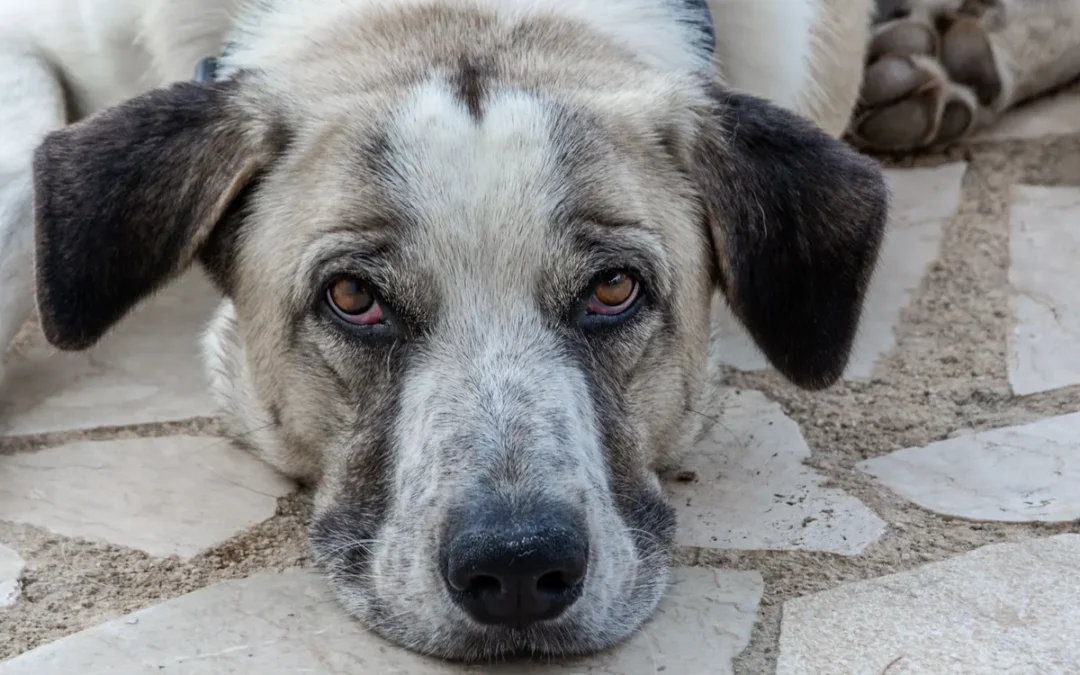
Signs your dog needs to go to the vet fall into two piles. Trouble breathing, a collapse, a hard swollen belly, a seizure, or straining to urinate with nothing coming out mean you drive now. Vomiting, loose stool, a skipped meal, a new limp or a cough mean you book this week and watch closely.
I am Gunner, and I am not a veterinarian. This page is not a diagnosis. It sorts symptoms by how fast a vet wants to see them, and every line below points to the veterinary source it came from.
I keep an English Mastiff, a group of barn cats, two rescue rabbits and a desert tortoise. Before Pet Approves I spent years as a mechanic in a custom off-road shop in Henderson, Nevada.
A mechanic learns fast which noises mean pull over and which mean book it in on Friday. Animals are the same. The hard part is telling the two apart at ten at night with a dog looking at you.
The signs your dog needs to go to the vet do not change. Only your window does.
Part of our dog calm and safety guide.
Jump to:
Signs Your Dog Needs to Go to the Vet, Split Two Ways
Almost every worried search comes down to one question. Is this tonight, or is this Thursday?
The veterinary sources sort it the same way, and the split is about airway, blood, belly and brain. Anything touching those four gets seen now. Anything that is a change in eating, drinking, stool, skin or gait gets an appointment.
Two things move a book-this-week sign into the go-now pile:
- Speed. A symptom that arrives in an hour is treated differently from one that built over a week.
- Stacking. One sign alone is a watch. Three at once is a call.
- Size and age. Puppies, seniors and toy breeds have far less reserve than a healthy adult dog.
The Cornell University Riney Canine Health Center publishes owner-facing guidance on canine health, and the Merck Veterinary Manual keeps a free pet-owner edition. Those two are the sources behind every symptom section below.
If you are reading this and your gut says something is wrong, call. A phone triage costs you five minutes, and no clinic has ever been annoyed with me for asking.
Keep that split in your head as you read the rest. The signs your dog needs to go to the vet are the same list either way, and the only question is how many hours you have.
Signs Your Dog Needs to Go to the Vet Tonight
These are the ones where waiting for morning is the wrong call. Do not sit and search. Phone the clinic from the car if someone else can drive.
- Trouble breathing. Open-mouth breathing at rest, stretched-out neck, blue or grey gums. Merck lists respiratory distress as an emergency in its owner guide to breathing problems in dogs.
- A swollen, hard belly with retching. Bloat, which vets call gastric dilatation and volvulus, sits in Merck’s owner page on disorders of the stomach and intestines in dogs, and deep-chested breeds are the ones it hits.
- A seizure, or more than one in a day, or one that will not stop. Merck covers seizures in its owner page on nervous system disorders and injuries in dogs.
- Straining to urinate with nothing coming out. Merck covers urinary obstruction in its owner page on noninfectious diseases of the urinary system in dogs.
- Collapse, or an inability to stand.
- Bleeding that does not stop, a suspected broken bone, or a hit by a car, even if the dog gets up and walks.
- A known poison, which includes chocolate, xylitol, grapes, rat bait and human medication.
My Mastiff is deep chested, so the bloat line is the one I have taped inside a cupboard door. Big dogs do not get a wait-and-see on a swollen belly.
Deep-chested breeds change the signs your dog needs to go to the vet from a list into a drill.
Everything above is on the short list of signs your dog needs to go to the vet immediately, and none of them improve with waiting.
Signs Your Dog Needs to Go to the Vet This Week, Not Tonight
This pile is longer and far more common. None of it is calm, but none of it is a midnight drive either.
Book an appointment for a dog who is eating less than usual for more than a day, drinking noticeably more, losing weight without a diet change, scooting, or newly reluctant on stairs.
Behaviour counts too. A dog who hides, snaps when touched in one spot, or stops greeting you at the door is telling you something.
- Write down when it started. Vets ask this first and nobody ever remembers.
- Note what changed in the house: new food, a new treat, a visitor, a move.
- Take a photo or a short video of anything you cannot describe in words.
Some of it is not medical at all. Storm season and fireworks change a lot of dogs, and our dog anxiety products guide covers the calming gear that helps a nervous dog settle. That is worth trying after a vet has ruled out pain, never instead of.
Vomiting
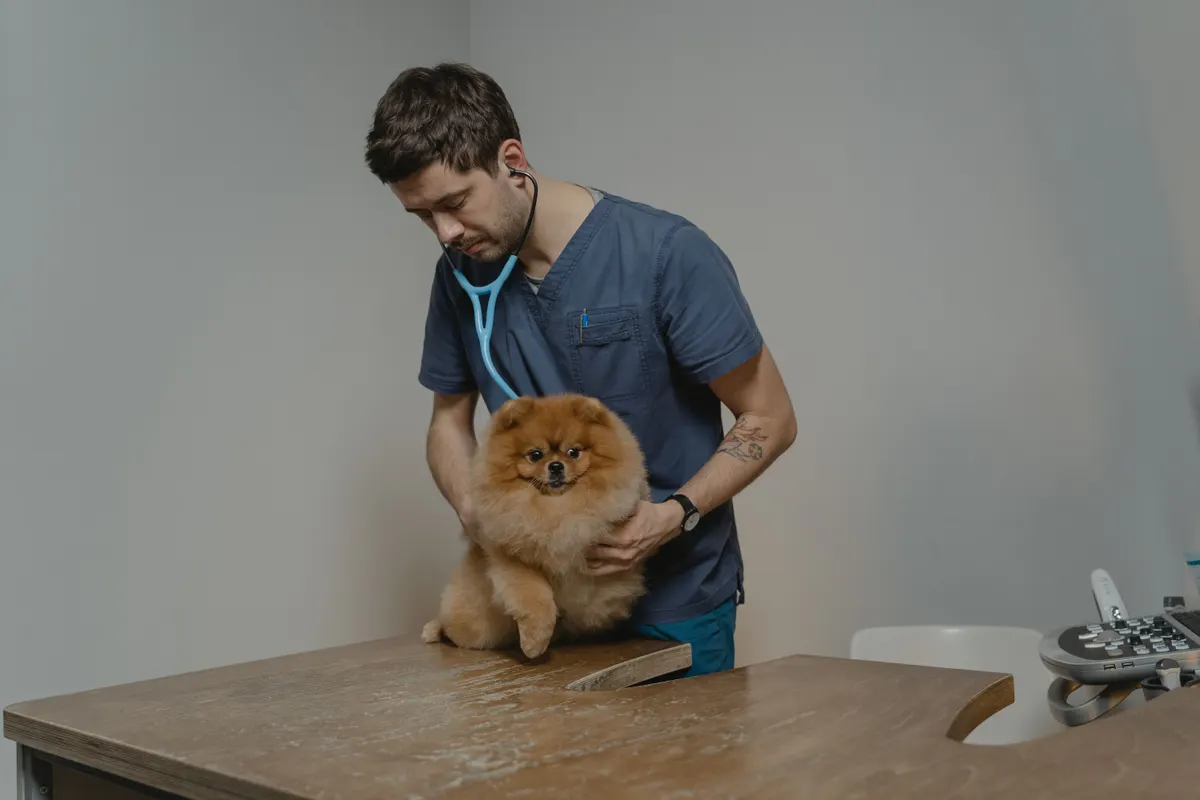
One throw-up from a dog who then eats, drinks and plays normally is usually a watch, not a crisis.
Merck’s owner page on vomiting in dogs separates the occasional episode from the pattern that needs a vet. The pattern is what matters.
Call the same day when any of these ride along with the vomiting:
- Repeated vomiting over several hours, or more than a day of it
- Blood, or something that looks like coffee grounds
- Retching with nothing coming up, especially in a deep-chested dog
- The dog will not keep water down
- A puppy, a senior, or a dog with a known condition
What I do at home for a single episode is simple. I pull the food bowl for a few hours, leave water down, and watch. If a second one comes, I stop guessing and phone.
Vomiting is the most common of all the signs your dog needs to go to the vet, which is exactly why it gets ridden out too often. One episode is information. A pattern is a phone call.
Diarrhea
Loose stool is the most searched symptom on this list and the one owners most often ride out.
Merck’s owner guide to diarrhea in dogs flags the difference between a short bout and one that carries risk. Dehydration is the real danger, and small dogs and puppies reach it fast.
Book a visit when the diarrhea runs past a day or two, and go sooner for any of these:
- Blood in the stool, or a black, tarry look
- Diarrhea plus vomiting together
- A flat, listless dog, or one whose gums look dry
- An unvaccinated puppy, where parvovirus is on the table
Bring a sample. It sounds unpleasant and it saves a second trip, because the lab work most clinics run needs one.
Loose stool sits low on most owners’ list of the signs your dog needs to go to the vet, and it climbs fast once a second day arrives. Watch the water bowl as closely as the yard.
Not Eating
A dog who skips one meal and then eats the next is fine. A dog who will not eat for a day is a different animal.
Merck names appetite loss as one of the first signals of digestive trouble in its introduction to digestive disorders of dogs. Appetite is a symptom of almost everything, which is why it rarely stands alone.
Twenty four hours is the number I use for an adult dog. For a puppy it is much shorter, because small dogs run out of blood sugar quickly.
- Check the mouth if the dog will let you. A broken tooth or a stuck stick shows up here.
- Check whether water is going down too. Off food and off water is more urgent than off food alone.
- Rule out the boring answer first: someone in the house has been feeding scraps.
Our dog feeding guide covers the normal side of this, portions, bowls and food changes, for when the vet gives you the all clear.
A dog going off its food is one of the quietest signs your dog needs to go to the vet. There is nothing to see and nothing to clean up, so it gets noticed late.
Coughing And Kennel Cough
A dry, honking cough after a boarding stay or a day at daycare is the classic picture owners describe.
Merck’s owner page on coughing in dogs lists kennel cough, infectious tracheobronchitis, among the causes, alongside heart and airway problems that look similar from the outside. That overlap is exactly why a cough gets an appointment rather than a home guess.
Book this week for a cough that has run more than a few days, or that keeps the dog up at night.
Go now if the cough comes with any of these:
- Blue or grey gums, or breathing that looks like work
- Coughing up blood or foam
- Collapse or fainting after a coughing fit
Call the clinic before you walk in with a coughing dog. Most will bring you through a side door so you are not sitting in a waiting room with puppies.
A cough is one of the few signs your dog needs to go to the vet that also affects everyone else in the waiting room, so the phone call before you arrive is a courtesy as much as a plan.

Limping
A limp that shows up after a hard run and clears in a day is usually a strain. A limp that lasts is not.
Merck’s owner material on lameness in dogs runs through the range, from soft tissue injury to joint disease, and makes the point that where the pain sits matters more than how loud the dog is about it.
Go now for a leg the dog will not put down at all, an obvious break, a wound, or a limp after a fall or a car.
Book this week for the rest:
- A limp that is still there after two or three days
- Stiffness that is worst first thing in the morning
- A dog who has started refusing stairs, jumps or the couch
- Any limp in a big or heavy breed, where joints carry more load
The one thing I can speak to from my own house is the sleeping surface. Hard floors are rough on a big dog, and our dog beds guide sorts orthopedic foam beds by size and sleeping style. Give it a few nights before deciding whether the pet approves the size. A bed is comfort, not treatment, and it does not replace the appointment.
Among the signs your dog needs to go to the vet, a limp is the one owners most often wait out. Two or three days is the fair window. After that you are not watching, you are hoping.
Hot Spots And Raw Skin
Hot spots move faster than anything else on this page. A coin-sized patch in the morning can be the size of your palm by dinner.
Merck’s owner page on itching, or pruritus, in dogs describes the cycle behind it, a dog licking and chewing one spot until the skin gives way. Its page on pyoderma in dogs covers the bacterial skin infection that follows.
Book this week, and sooner if the patch is spreading, smells, or the dog will not leave it alone. The itch usually has a cause underneath it, fleas, allergies or an ear problem, and treating the patch without the cause just buys a week.
- Stop the licking. A cone is miserable for a night and better than a wound.
- Do not put human creams on it. Dogs lick everything off.
- Take a photo the day you find it, so the vet can see how fast it grew.
Grooming is the honest prevention here. Getting the undercoat out before it mats keeps skin dry, and our dog grooming supplies guide covers the brushes and dryers that do it.
Skin is the one place where the signs your dog needs to go to the vet are visible from across the room. Use that. A photo on the first day tells the story better than any description.
What To Have Ready Before You Call
Every clinic asks the same four things, and having them ready shortens the call and the visit.
- When it started, in hours or days, and whether it is getting worse
- What the dog has eaten, including treats, chews, scraps and anything found on a walk
- Weight, age and current medications, including flea and worm treatment dates
- Photos or video of the limp, the cough or the patch
Keep the records somewhere you can reach on a phone. Vaccination dates and past visits live in a portal at most clinics now, and a screenshot in your photos beats a folder at home.
Then think about the drive. A frightened or sore dog in a moving car is a real problem, and a carrier or a proper restraint solves it. You know fast whether the pet approves a new carrier. Our dog carrier guide covers travel crates, car seats and ramps for dogs who cannot jump in.
Sorting the signs your dog needs to go to the vet is half the job. Getting the animal there calmly is the other half, and it is the half people plan for least.
FAQ
These are the questions people search alongside the signs your dog needs to go to the vet. Short answers, and none of them are a diagnosis.
What are three signs a dog is suffering?
Hiding, a change in posture, and a refusal to be touched in one spot. Cornell’s Riney Canine Health Center page on recognizing pain in dogs makes the point that dogs mask it, so the signal is usually withdrawal rather than crying. Panting at rest, in a cool room, belongs on that list too.
How do I tell if my dog needs the vet?
Ask whether the symptom touches breathing, bleeding, the belly or the brain. Those four go now. Changes in eating, drinking, stool, skin or gait get an appointment this week. When two or three signs stack up on the same day, move it up.
What are the first signs of parvo?
Merck covers canine parvovirus in its owner page on disorders of the stomach and intestines in dogs, and the picture is lethargy, appetite loss, vomiting and severe, often bloody diarrhea in an unvaccinated puppy. Any puppy with vomiting and diarrhea together is a same-day call, not a wait.
How long can a dog be sick before I take it to the vet?
For a mild single symptom in a healthy adult dog, twenty four hours of watching is reasonable. For a puppy, a senior, or a dog with a known condition, that window shrinks to a few hours. Anything on the go-now list has no window at all.
Is there a should-I-take-my-dog-to-the-vet quiz?
Several sites run one, and they are a rough sort at best. A phone call to your own clinic does the same job better, because the person answering knows your dog’s history and can hear the cough down the line.
No quiz can weigh the signs your dog needs to go to the vet against the animal in front of you. A person on the phone can, and it costs nothing.
When is it an emergency vet instead of my regular clinic?
Whenever your clinic is closed and the symptom is on the go-now list. Find your nearest emergency hospital now, before you need it, and save the number. Ten at night is a bad time to start searching.
Emergency clinics see the same signs your dog needs to go to the vet that a day practice does, just at the hours when nobody else is open.
Should I wait to see if it clears up on its own?
For one mild symptom in a healthy adult dog, a day of watching is fair. The trap is that waiting feels productive while nothing is being done. Set a time, write it down, and call when you reach it.
Waiting is a decision, so make it on purpose. Write the time down, name the signs your dog needs to go to the vet that you are watching for, and call when you hit either one.
 Gunner Vance