
Backyard chicken supplies come down to four things. A coop, a door, water, and feed. Everything after that is comfort, some of it theirs and most of it yours.
I do not keep chickens. I keep a mastiff, a set of barn cats, two rescue rabbits and a desert tortoise, so this page is a research day plus what owners report. What I do bring is the mechanic’s eye. A coop door is a motor, a gearbox and a switch. A latch is hardware. Hardware cloth is a mesh with a stated wire gauge. I have spent twenty years deciding whether parts like that will last, and the same questions work here.
This is the hub for backyard chickens on Pet Approves. The whole kit in buying order, then the deep guides for the door, the coop and the water.
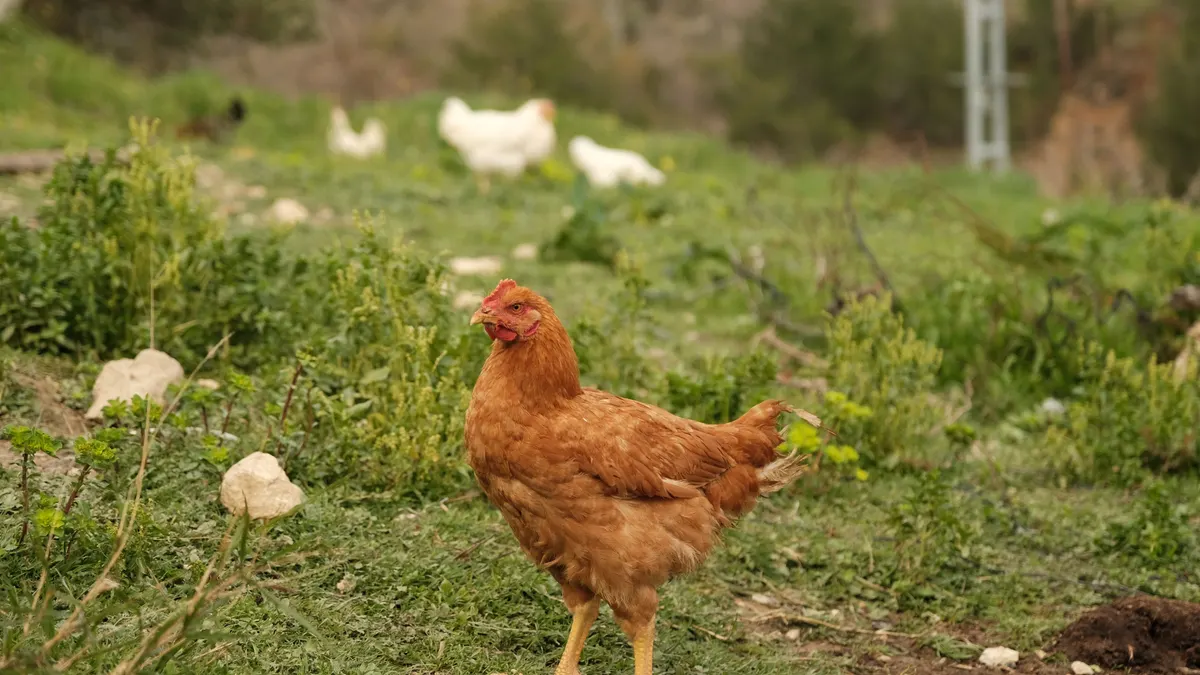
Best Chicken Waterer 2026: My 11 Picks After a Research Day
Eleven chicken waterers ranked after a full research day: gravity fountains, hose fed and float valve models, cup and nipple kits, and the insulated one for winter. A feature check table, what owners report about leaks and algae, and my top three by price.
Read the guide →Best Automatic Chicken Coop Door 2026: My 10 Picks After a Research Day
I do not keep chickens, so I spent a full research day on every automatic chicken coop door worth buying now and read what owners report after a winter. Ten doors ranked for solar power, cold weather, extra large openings, timer against light sensor and stated battery life, with a nine column feature check table and my top three.
Read the guide →Best Chicken Coop for 10 Chickens 2026: My 10 Picks After a Research Day
Ten chicken coops and walk-in runs for a flock of ten, compared on what each maker actually states and where owners say they break.
Read the guide →Jump to:
What a flock needs before the birds arrive
Every owner account I read says the same thing in different words. The gear goes up before the birds come home. Chicks grow faster than a weekend project gets finished, and a half-built run is the story that ends badly.
Six things make the starting kit. Shelter with a roost bar and nesting boxes. A run they cannot walk out of and nothing can walk into. Water they can reach all day. Feed and something to hold it off the ground. Bedding for the floor. Then a plan for whichever season your county does worst, heat or freeze.
| The thing | Why it is on the list | Guide |
|---|---|---|
| Coop and run | Roost, nesting boxes, a locked night space | Coops |
| Automatic door | Closes at dusk whether or not you are home | Doors |
| Waterer | The one supply that fails fastest in heat and freeze | Waterers |
| Feeder | Keeps feed off the ground and away from wild birds | Below |
| Feed storage | A sealed bin is what stops a rodent problem starting | Storage bins |
| Bedding | Floor of the coop, and the thing you replace most | Below |
Notice that only two of the six are the coop itself. The rest is the daily part, and the daily part decides whether you still enjoy this in year two.
The coop, and how big before you buy
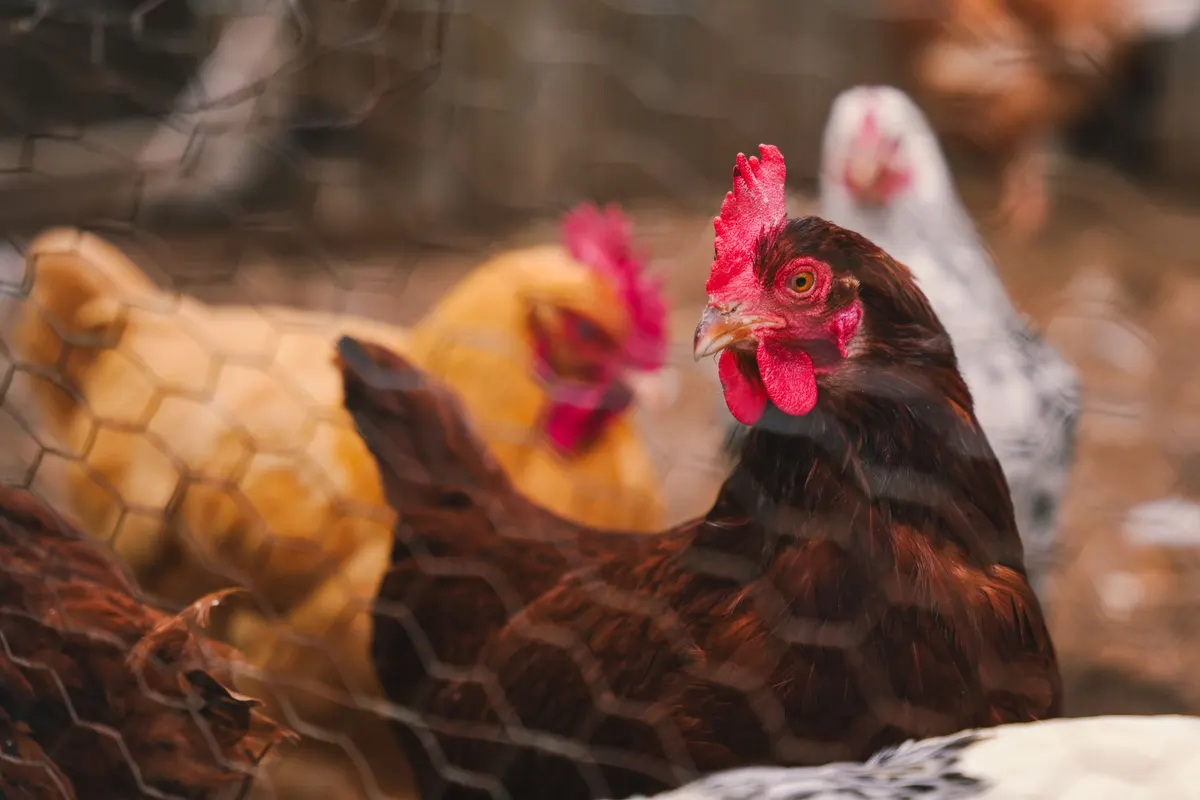
Size is the decision everyone gets wrong once. The makers’ guidance, repeated across coop listings and the backyard chicken forums, runs to roughly four square feet inside per standard hen and eight to ten square feet each in the run. Bantams need less, heavy breeds need more, and every source says give more where you can.
The second number owners raise constantly is the rated capacity on the box. Forum threads are full of the same advice: halve the maker’s bird count and you land near what those owners say actually works. A coop advertised for ten is discussed as a comfortable six.
The makers also state a roost length per bird and a nesting box count, usually one box for every three or four hens. Hens queue for one favourite box anyway, which owners find funny until they own it.
Then the build. Walk-in coops cost more and clean faster, because you stand up inside instead of reaching through a hatch. Raised coops give shade underneath and keep the floor off wet ground. My eye goes to the hinges and the roof: thin stamped hinges on a heavy door are the first thing to sag, and a roof that only overhangs by an inch will run water down the wall.
The full breakdown, including walk-in models, run-attached coops and the capacity question, is in the chicken coop for 10 chickens guide. It is written around the biggest common flock size, and the sizing logic scales down cleanly to four or six birds.
The automatic door, the first upgrade
Ask any group what they bought second and the answer is the door. A flock has to be shut in at dusk and let out at dawn, every day, and an automatic door is the part that does not care whether you are at work, asleep or away for the weekend.
Two ways to trigger one. A light sensor reads dusk and dawn, so the door tracks the season by itself. A timer fires at a clock time you set, which is predictable but drifts away from real sunset through the year. Several doors offer both, and owners in the threads mostly land on light sensing with a timed override.
Power splits the same way. Battery units go anywhere and want fresh cells once or twice a year. Solar units carry a small panel and suit a coop with no cable run. Mains units never need a thought if there is already an outlet nearby.
Here is where the mechanic’s eye earns its keep. The motor and the drive are the whole product. A worm gear or a screw drive lifts a heavier door and holds it closed without power. A string drive is lighter and cheaper, and a string is a wear part. Aluminium door panels stay flat, thin plastic ones can bow in sun. Makers state a working temperature range on cold-weather models, and that stated range is the number to compare rather than any claim about winter in general.
Obstruction handling matters too, and it is stated in the specification rather than assumed. Some doors reverse when they meet resistance, some stall, some do neither. The automatic chicken coop door guide puts the stated temperature ranges, opening sizes, drive types and power options into one table, because no page one result had that table.
Water, in heat and again in winter
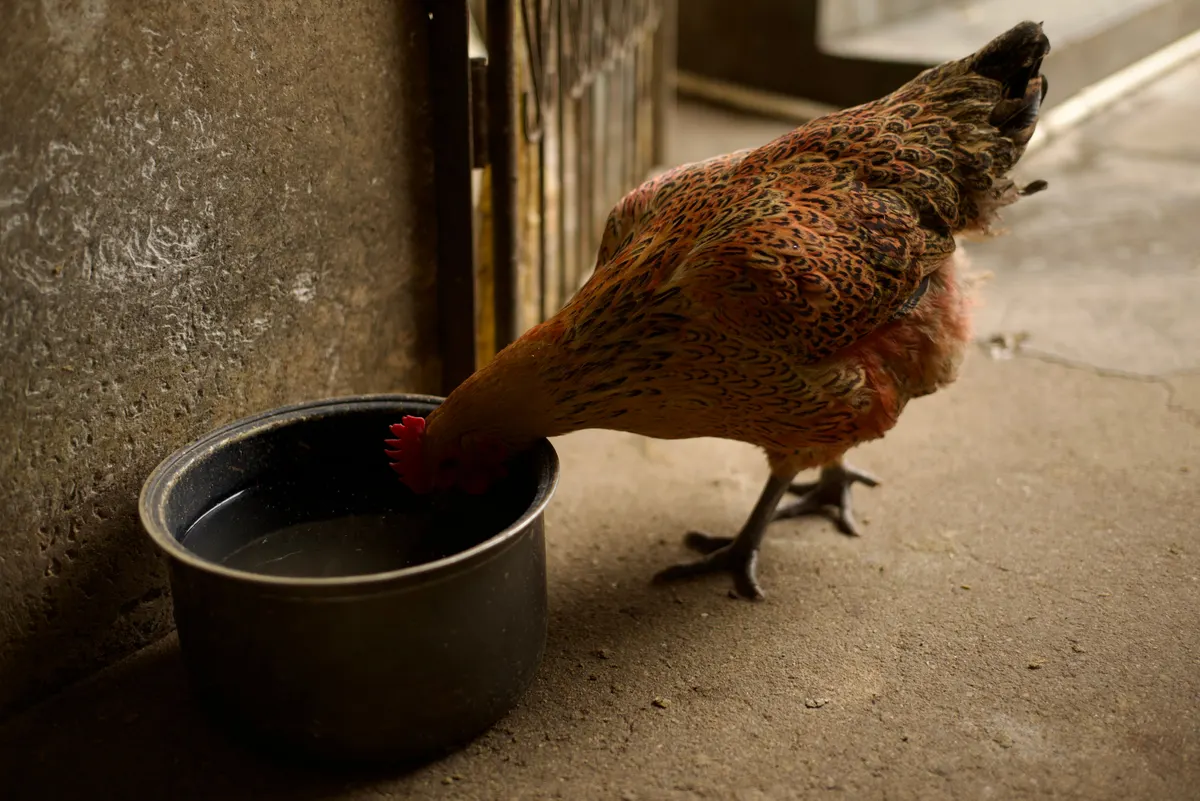
I grew up in Henderson, Nevada, where the summer sun cracks plastic bowls. Water was the first thing to go wrong with every animal I have kept, so it is the supply I take most seriously here. Owners in hot states describe refilling twice a day in July and moving the drinker into shade. Owners in cold states describe the opposite problem, a solid block by breakfast.
Open founts are the classic. A jug over a tray, cheap, easy to fill, and the tray collects bedding, feathers and algae, so it wants rinsing often. Nipple systems hang under a bucket and stay clean, and owners report new birds take a day or two to work out the mechanism. Cup systems sit between the two, a small float or trigger fills a cup on demand, and the birds understand it instantly.
Scale changes the answer. A five gallon bucket lasts a small flock several days. Hose-fed and float-valve systems refill themselves from a garden line, which is the setup owners with larger flocks or a travel schedule end up building.
Winter is a separate purchase. Heated bases and heated buckets are sold specifically to stop the water freezing, and they are mains-powered, so a safe cord run to the coop is part of the buying decision rather than an afterthought. The chicken waterer guide covers heated, automatic, cup and nipple designs, and the cleaning routine each one needs.
Feeders and feed storage
A feeder does two jobs. It holds feed off the ground, and it keeps the flock from billing half of it into the dirt. Wasted feed is the cost nobody budgets for, and it is the thing owners complain about most in the first month.
Hanging tube feeders are the simple answer, hung at back height so birds reach in without scratching feed out. Port feeders push that further, with rain-shielded holes on the side of a sealed bucket and almost no spill. Treadle feeders take it furthest: the hen steps on a plate, the lid opens, and it shuts when she steps off. Owners buy them for the rodents rather than the waste, and the threads say the training period is a real thing, so most people prop the lid open for the first week.
Storage is the other half. An open bag of feed in a shed is an invitation, and every group thread on mice ends with the same advice, seal the feed. A metal can with a clamped lid is the traditional fix. A sealed airtight bin is the modern one, and the bins built for dog food work identically for layer pellets. The pet food storage container guide covers the sealing lids, wheeled bins and stackable sets, and the same gasket-and-latch questions apply to a bag of feed.
One habit worth copying from the forums: keep the feed bin outside the coop and off the floor, on a pallet or a shelf. Damp concrete is what turns a good bin into a spoiled bag.
Predator proofing, in the makers’ words
This is the section where I quote rather than claim, because it is the part with real consequences. Coop makers and owner groups agree on one line above all others. Chicken wire is described as fencing that keeps chickens in, not as a barrier that keeps predators out.
What they specify instead is hardware cloth, a welded mesh sold in quarter inch and half inch grid sizes with a stated wire gauge. It goes over every window, vent and run panel, and the makers’ instructions call for washers or a batten strip under the fixings, because staples alone can be pulled through.
An apron is the second recurring instruction. Hardware cloth laid flat on the ground around the perimeter, or buried a few inches, is how the makers describe stopping anything digging along the wall. Owners who lost birds usually report the loss came from underneath or through a vent, not through the door.
The door itself is a hardware question, and this one is squarely mine. A raccoon defeats a single slide bolt, which is why the guidance across coop makers is a two-step latch, a spring-loaded catch, or a bolt with a carabiner through it. Two separate actions, one of them requiring an opposable thumb. My rule from the shop applies: if a fastener can be worked loose by patient wiggling, treat it as already open. Barrel bolts with a clip, and hinges bolted through rather than screwed into end grain, are the version that stays shut.
Bedding and cleaning
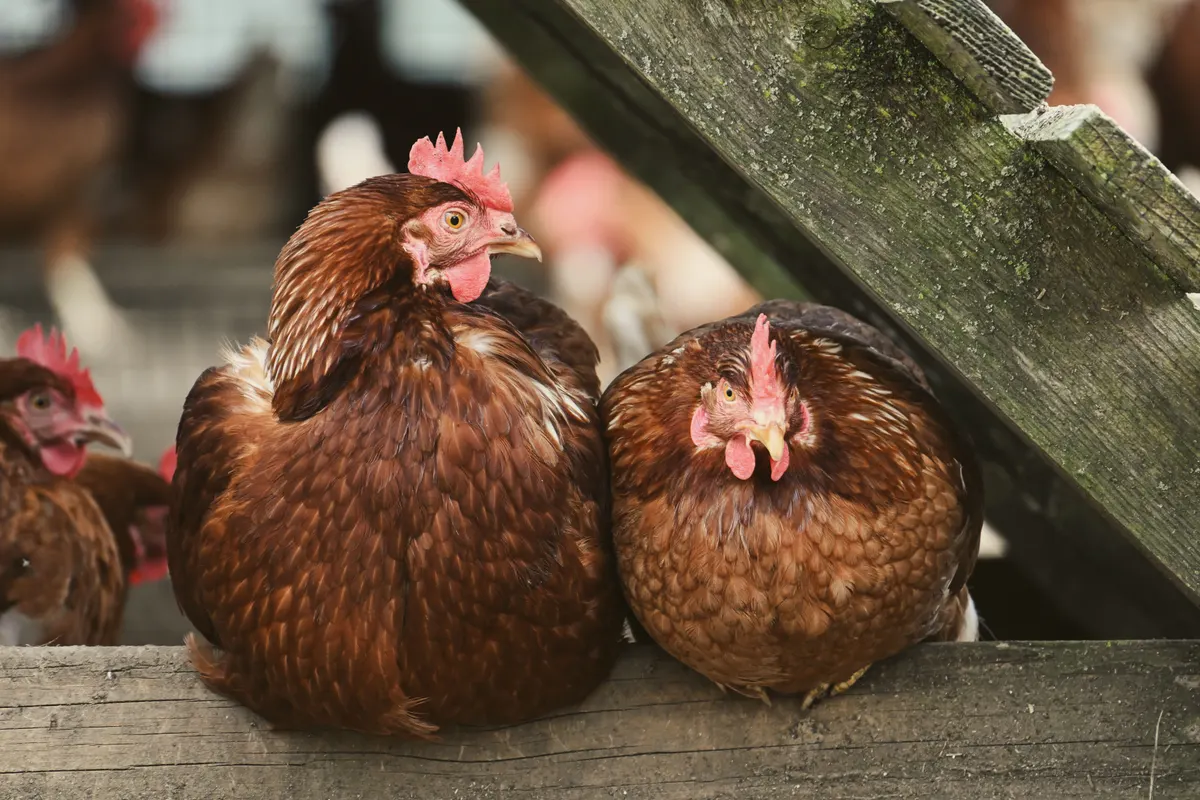
Bedding is the supply you rebuy forever, so the choice is worth ten minutes. Pine shavings are the default in nearly every owner account, cheap, absorbent and sold in compressed bales. Chopped hemp bedding costs more per bale and owners say it lasts longer and makes less dust. Sand has a following for runs and floors, and the people who use it describe scooping it like a litter box rather than replacing it.
Cedar shavings come up often, and the forums consistently steer new owners away from them. Straw divides opinion: warm and cheap, slower to break down, and it mats when wet.
The single upgrade owners recommend most is a droppings board, a removable tray or plank under the roost bar. Most of the night’s mess lands in one strip, so catching it there turns the daily job into a two-minute clear-out and keeps the rest of the bedding usable for weeks.
Deep litter is the method the long-time keepers describe. Instead of stripping the coop weekly, they add fresh bedding on top and turn it, letting the layer compost in place through the season, then clear it out once or twice a year. It is a routine rather than a product, and the tools it needs are a good rake, a scoop and a bin for what comes out.
The order to buy in
- Coop and run first, sized by the makers’ square-foot guidance and then given more room than the box claims.
- Hardware cloth and latches next, before the birds arrive, because this is the part nobody wants to fix in a hurry.
- Water, chosen for your worst season. Heated for a freezing county, shaded and large for a hot one.
- A feeder and a sealed feed bin, bought together. The bin is what keeps rodents from becoming the next project.
- Bedding and a droppings board, the two things that decide how long the daily clean takes.
- The automatic door last, and only because it is an upgrade rather than a necessity. Everyone buys it eventually.
Note: the parts that fail first are almost never the wood. They are the hinges, the latch, the mesh fixings and the door motor. Buy the coop for its size, then plan on upgrading its hardware.
Chickens rarely live alone on a property. The pet food storage container guide, the outdoor cat house guide and the pet home hub cover the rest of the yard.
Frequently asked questions
What do you need to start raising backyard chickens?
A coop with a roost and nesting boxes, a secure run, a waterer, a feeder, a sealed feed bin and bedding. An automatic door is the first upgrade after that.
How many chickens should a beginner start with?
Owner accounts point at four to six. Chickens are flock birds and want company, and six is a number a small coop and one waterer handle easily.
How much space do chickens need?
The makers’ guidance and the forums both land near four square feet inside per standard hen, plus eight to ten each in the run. Every source says more is better.
Is an automatic chicken coop door worth it?
For most keepers, yes. It is the difference between being home at dusk every single day and not. Compare the drive type, the power source and the stated temperature range before choosing.
What is the best chicken waterer for winter?
A heated base under a metal fount, or a heated bucket, both sold specifically to stop freezing. Both are mains-powered, so plan the cord run to the coop first.
How often do you clean a chicken coop?
Owners describe clearing the droppings board daily, a bedding top-up weekly, and a full strip once or twice a year. Deep litter keepers strip least often of all.
 Gunner Vance