
Aquarium supplies are bought in the wrong order more often than any other pet gear. People buy the fish first, the tank second, and the filter last. Turn that around and most beginner tanks stop failing.
I do not keep fish. My animals are dogs, cats, rescue rabbits and a desert tortoise, so this page is a research day rather than my own tank. What I brought to it is the part I do know, which is hardware: pumps, impellers, seals, cords and glass under load.
This is the aquarium supplies hub on Pet Approves. Tank size first, then the tank and stand, filtration, heat, light and substrate, the cycle, stocking, cleaning, and the two places people step outside a normal freshwater setup. Each section hands off to the deep guide where we have one.
Best Aquarium Heater for 50 Gallon Tanks: 11 Picks for 2026
Eleven aquarium heaters for a 50 or 55 gallon tank, ranked by the tank range each maker states, with a sizing table, a feature check table and my top three by price.
Read the guide →Best Aquarium Filter for 20 Gallon Tanks: My 10 Picks for 2026
I do not keep fish, so I spent a full day on every filter you can buy for a twenty gallon tank right now. Ten picks, the specs the makers state, and what owners report after two years.
Read the guide →Jump to:
- Aquarium supplies, tank size first
- The tank, the stand and the lid
- Filtration, the part that does the work
- Heating and holding a steady temperature
- Light, substrate and aquascaping
- The nitrogen cycle and the test kit
- Stocking, how many fish the tank holds
- Water changes and cleaning aquarium supplies
- Turtles and water pets need different gear
- Saltwater and nano reef, what changes
- Aquarium supplies to buy first, in order
- Aquarium supplies questions, answered
Aquarium supplies, tank size first
Every other choice on this page follows the number of gallons. The gallon figure sets the filter, the heater wattage, the light and the stocking list, so decide it before you buy a single accessory.
The advice that surprised me most in a day of reading is that beginners are steered away from the smallest tanks. Owners on the aquarium forums say the same thing over and over. A small volume of water swings fast, and a large one forgives a mistake.
That is a physics argument, not a fish argument, and it is the one part of this hobby my shop brain understood immediately. A small system has no thermal mass and no dilution. Anything that goes wrong goes wrong quickly.
Twenty gallons is the size most beginner advice lands on. It is big enough to be stable, small enough to sit on ordinary furniture, and the gear for it is everywhere. Fifty and fifty five gallon tanks are the next common step, and they need a stand built for the job.
Buy the equipment to the tank, not to the fish you plan to add later. A filter rated under your gallon figure is the single most common gap in a beginner list.
Here is how the gallon figure routes to the rest of the aquarium supplies list.
| Tank size | What it decides | Guide |
|---|---|---|
| 10 to 20 gallons | Filter flow, a small heater, a short light | Filters for 20 gallon |
| 20 gallon long | Wider footprint, filter placement, more floor | Filters for 20 gallon |
| 29 to 40 gallons | A real stand, a stronger filter | Filters for 20 gallon |
| 50 to 55 gallons | Heater wattage, a second heater option | Heaters for 50 gallon |
| Any size, planted | Light hours, substrate, plant weight | Aquascaping, below |
| Turtles, not fish | Far more filtration, a basking area | Turtle tank filters |
The tank, the stand and the lid
The glass box is the least interesting item in a list of aquarium supplies and the one people spend the longest choosing. Buy the plain rectangular tank. Bowfront and hexagon tanks cost more, hold less water for the footprint, and make every accessory harder to fit.
Glass or acrylic is the real fork. Glass scratches less and stays clear for years. Acrylic is lighter, holds an impact better, and marks if you clean it with the wrong pad.
The stand is where I would spend the attention. Water is heavy, and a filled tank puts a large, permanent, evenly spread load on whatever it sits on. Dressers and shelving units are not built for a load that never comes off.
Look for a stand that carries the weight down through its corners into the floor, not through a shelf panel in the middle. This is the same reasoning I use under a truck. A frame that puts the load into the corners is a frame; a panel holding weight in its middle is a panel waiting to bow.
Check the top is flat and full contact. A tank sitting on a high spot loads that one point, and glass does not forgive a point load the way steel does.
The lid does three jobs. It slows evaporation, it holds the heat in, and it stops fish going over the edge. Several common species are known jumpers, and owners lose more fish to an open top than to anything they expect.
Leave yourself a gap for cords. Most lids ship with a cutout at the back for filter and heater cables, and a lid that seals completely is a lid you will end up cutting.
Everything after this point is aquarium supplies that plug in, drop in or get poured in, and all of it can be changed later. The tank and the stand are the two you live with.
Filtration, the part that does the work
The filter is the piece of aquarium supplies that keeps the water alive. It does not just catch debris. It holds the bacteria colony that processes fish waste, which is the whole engine of a working tank.
That is why “rinse the filter media in tap water” is the beginner mistake every forum warns about. The media is not dirt to be cleaned off, it is the culture. Owners rinse it in tank water they just siphoned out, and only when the flow drops.
Three shapes cover almost every freshwater tank. A hang on back filter clips on the rim and is the default. A sponge filter runs off an air pump, is nearly silent, and is gentle enough for fry and shrimp. A canister sits under the stand and moves a lot of water through a lot of media.
Rate the filter above your tank size, not at it. The flow figure printed on a box is measured with no media in the way and no head height, so the number you get in the room is lower than the number on the label.
Noise is the complaint that makes people give up on a tank in a bedroom. Most of it is not the motor. It is water falling into water at the outflow, an impeller that needs cleaning, or a tank filled slightly low so the return splashes.
My hardware read on filters is simple. The impeller and its shaft are the wear parts, they are cheap, and a maker that sells you a replacement impeller five years from now is worth more than a maker with a better box.
The aquarium filter for 20 gallon guide is the deep version of this section. It ranks hang on back, internal, sponge and canister filters, covers the 20 gallon long footprint, the planted tank picks, and the quietest options.
Heating and holding a steady temperature
Most popular freshwater fish are tropical, so a heater joins the aquarium supplies list for almost every tank. The goal is a steady temperature, not a warm one, and steady is a harder problem than warm.
Wattage is sized to the volume of water and to how cold the room gets at night. Heater makers publish their own gallon guidance on the box, and that guidance is the figure to follow, not a rule of thumb from a comment thread.
A room that drops overnight is the case people underestimate. A garage, a basement or a room with the heat off works the heater harder than the gallon number alone suggests.
On a larger tank, two smaller heaters beat one big one. Owners run them at opposite ends, which spreads the heat and means a single failure does not take the whole tank with it. A heater that fails on is the worse failure of the two.
Placement matters more than the model. Put the heater in moving water, near the filter outflow or intake, so the warmth is carried around the tank instead of pooling in one corner. A heater in a dead corner reads its own hot spot and shuts off early.
Get a separate thermometer. The dial on a heater is a setting, not a measurement, and the only way to know the water temperature is to read the water. It is one of the cheapest aquarium supplies in the shop and it is the one that catches a heater going wrong.
Then the part I do have standing to talk about, which is the cord and the seal. Heaters live fully submerged with power running into them, so I look for a thick cord, a moulded strain relief where it enters the body, and a drip loop in the cord before it reaches the outlet. Follow the maker’s own installation instructions on this, every time.
The aquarium heater for 50 gallon guide goes deeper. It covers wattage sizing, submersible rod heaters against controller models, what changes between a 50 and a 55 gallon tank, and placement.
Light, substrate and aquascaping
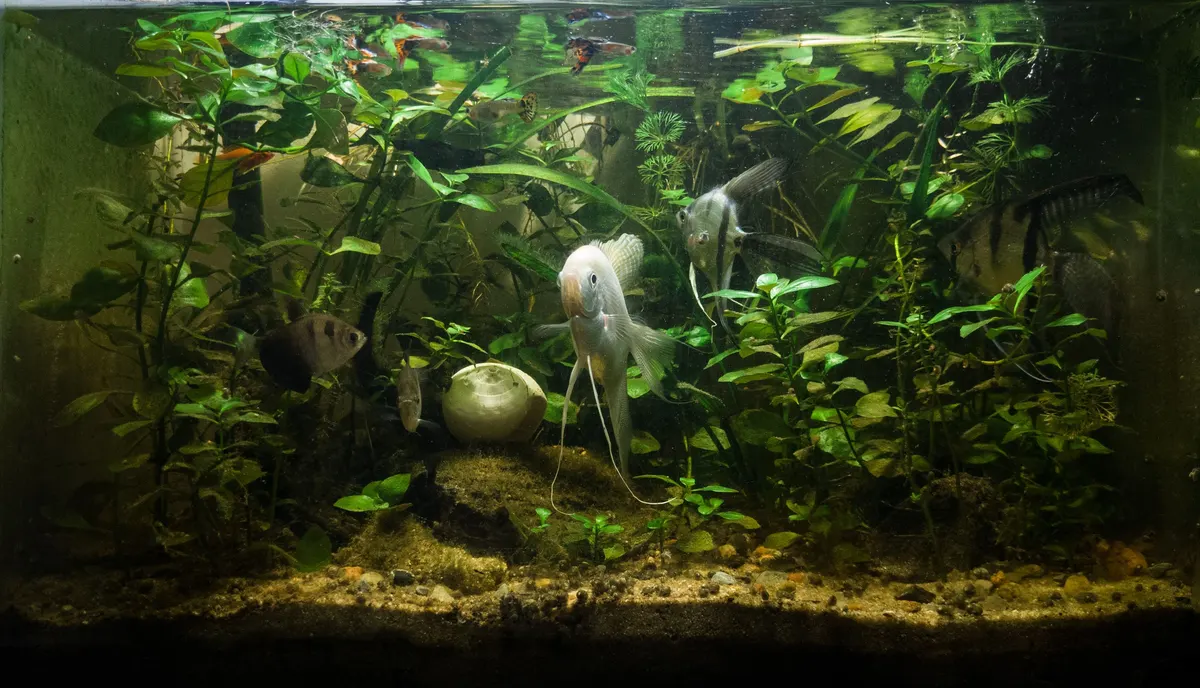
Substrate is the one decision that is genuinely hard to undo. Everything else on this list unplugs. Changing the substrate means taking the tank apart, so pick it before the water goes in.
Three kinds of substrate cover most aquarium supplies lists. Gravel is the general purpose answer and the easiest to clean with a siphon. Sand suits bottom dwelling fish that sift it, and it shows waste rather than hiding it. Plant substrates are made to feed roots and are the choice if a planted tank is the plan.
Rinse whatever you buy until the water runs clear. Skip that and the tank stays cloudy for days while people troubleshoot a filter that is working fine.
On light, the useful thing I learned is that more light is not better light. Too many hours is the standard cause of an algae problem, and owners solve it by cutting the photoperiod before they buy anything. A cheap outlet timer is the fix, because a light run by hand is a light run inconsistently.
Plants change the shopping list. They want a light meant for growth rather than for looking at fish, and they want a substrate that holds nutrients. Start with the plants that get recommended to beginners constantly, the ones that tolerate low light and do not need injected carbon dioxide.
Aquascaping is where the hobby gets its hooks in. The layout advice that repeats everywhere is to build from the back to the front, put height at the back and the sides, and leave open swimming room across the middle.
Use odd numbers of rocks or pieces of wood, and pick one material rather than three. Wood needs soaking or weighting until it stops floating, and it usually tints the water for a while, which is normal and not a fault.
My caution here is the same one I apply to any hardware. Anything going into the water is going to sit there for years, so avoid painted or coated ornaments and buy aquarium supplies made for a tank rather than a craft shop version that looks the same.
The nitrogen cycle and the test kit
This is the section that separates a tank that works from a tank that keeps killing fish. A new tank is not ready for fish on the day you fill it. It has to grow a bacteria colony first, and that takes weeks.
The short version, and this is the standard account rather than anything of mine. Fish produce ammonia. One group of bacteria converts ammonia into nitrite. A second group converts nitrite into nitrate. Water changes remove the nitrate. Until both bacteria groups are established, waste has nowhere to go.
Ammonia is the part worth understanding rather than memorising, and the University of Florida IFAS extension write-up on ammonia in aquatic systems is a better source than any gear page, this one included. The Merck Veterinary Manual section on aquarium fishes covers the husbandry side.
Owners describe two ways through it. A fishless cycle, where you add an ammonia source to an empty tank and wait. Or a cycle seeded with media from an established tank, which is why aquarium clubs and local shops hand out used filter media.
You cannot run a cycle by eye. Clear water tells you nothing, because ammonia and nitrite are invisible. A liquid test kit is what tells you the tank is ready, and it is the least exciting thing on the aquarium supplies list and the one I would not skip.
Owners report that liquid kits are worth the extra step over paper strips for the readings that matter during a cycle. Test until you see ammonia and nitrite both read zero while nitrate is present. That is the tank telling you it is finished.
Water conditioner is the other bottle in the aquarium supplies list to have from day one. Municipal tap water is treated to be safe for people, and a conditioner is what makes it safe for a tank. Add it to every drop of new water, including every water change afterwards.
Patience is genuinely the cheapest item here. Every expensive beginner problem I read about traced back to fish going in before the tank was ready.
Stocking, how many fish the tank holds
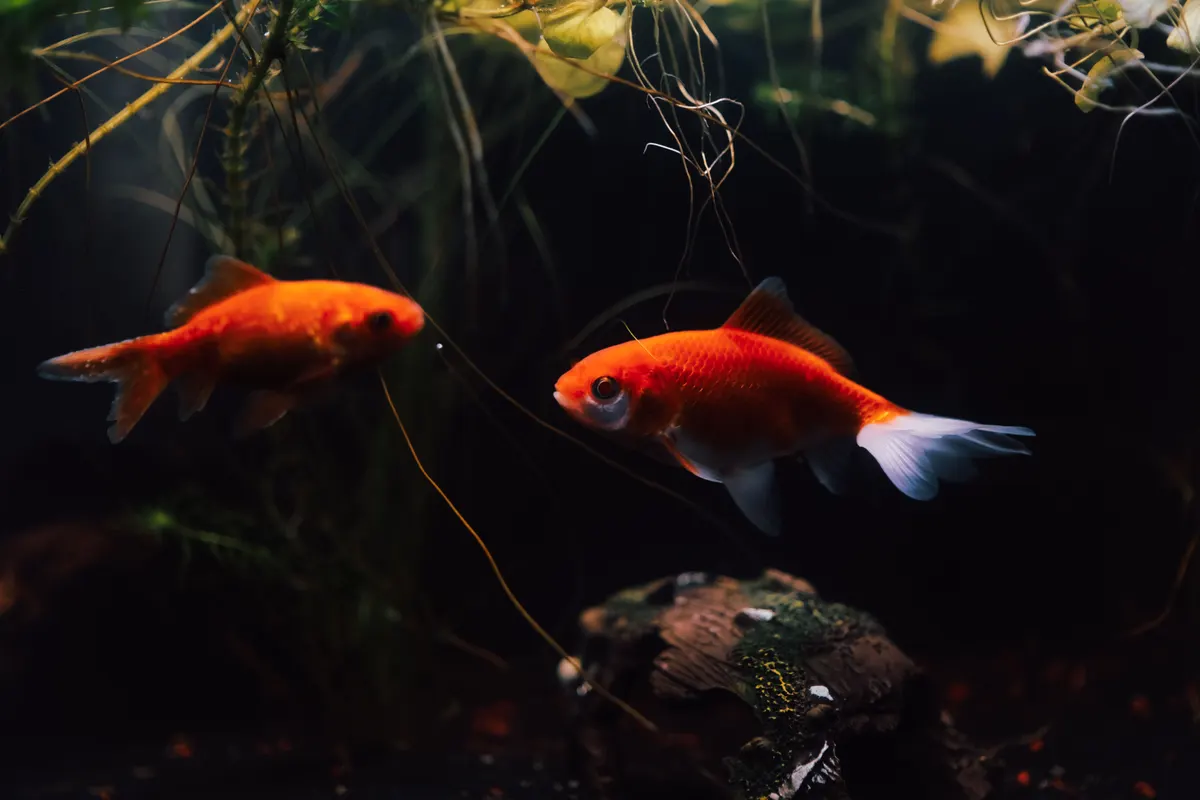
Stock to the adult size of the fish, not the size in the shop. That is the single most repeated piece of stocking advice, and the reason a common goldfish is a bad fit for a small starter tank.
The old inch per gallon rule gets quoted constantly and criticised just as constantly. It ignores body shape, waste output and behaviour. A long slim fish and a deep bodied fish of the same length are not the same load on a filter.
Add fish slowly. The bacteria colony grows to match the waste it is given, so a group at a time, with a couple of weeks between, lets the filter catch up. Everyone in the tank at once is how a cycled tank crashes anyway.
Check the social requirements before the numbers. Schooling species are kept in groups, and a single one is a stressed one. Some popular fish are territorial, some are fin nippers, and some grow far larger than the tank they are sold for.
Footprint matters as much as volume, and no amount of aquarium supplies fixes the wrong shape of tank. Active swimmers want length. Tall thin tanks hold gallons without giving a fish anywhere to swim in a straight line, which is the other argument for a plain rectangle.
Ask the shop what the fish reaches at full size and how many it needs around it. A shop that answers both questions properly is worth going back to.
One rule sits outside the tank entirely. Never release an aquarium fish or plant into a waterway. Released aquarium species have become invasive problems in a lot of places, which is what Habitattitude and the US Fish and Wildlife Service Don’t Let It Loose campaign exist to explain. Rehome through a shop, a club or another owner instead.
Water changes and cleaning aquarium supplies
The water change is the maintenance job, and nothing else on this list replaces it. A filter processes waste into nitrate. Only a water change takes the nitrate out.
A gravel vacuum siphon is the item on the aquarium supplies list that does it. It pulls water out and lifts the waste out of the substrate at the same time, so one job covers both. Owners work a section of the substrate each time rather than the whole floor at once.
Match the new water to the tank before it goes in. Temperature close, conditioner added, poured in gently rather than dumped onto the substrate.
Never use household cleaners on anything that touches the tank. Soap residue is the risk, and it does not rinse off as well as people assume. A bucket kept only for the aquarium, marked so nobody borrows it, is the standard answer.
Algae is a maintenance problem before it is a product problem. Owners cut the light hours, feed less, and change water more often, and most of it goes. A magnet cleaner handles the glass, and the pads sold for acrylic are softer for a reason.
Overfeeding is the cause hiding behind half of these jobs. Uneaten food is waste that goes straight into the same cycle the filter is already managing, and every beginner thread lands on it eventually.
Keep a routine rather than a schedule you will not hold. A weekly partial change, a monthly look at the filter, and a test kit reading whenever something looks off is what owners describe as the setup that lasts.
Our pet cleaning supplies guide covers the floor around the tank, the spills and the stains, which is the part of aquarium supplies nobody warns you about.
Turtles and water pets need different gear
People find this hub looking for a turtle setup, so it is worth being direct. A turtle is not a fish, and turtle gear is not aquarium supplies with a different label.
Turtles produce far more waste than fish of the same size. The filtration guidance owners follow is to rate the filter well above the actual water volume, because a filter sized for a fish tank of that size will not keep up.
They also need to get out of the water. A basking area and the heat and light above it are part of the build, not accessories, and the water is usually kept lower than a fish tank of the same footprint.
My own tortoise is a land animal and shares almost nothing with this except the research habit, so I am pointing you at the pages built for it rather than guessing. The turtle tank filter guide covers the filtration side, and the reptile supplies hub covers the enclosure, the heat and the lighting.
Shrimp and snails are the other common non-fish addition, and they change one thing in particular. Intake flow. A standard filter intake pulls in shrimp and fry, so owners fit a sponge guard over it or run a sponge filter instead.
The general rule holds across all of it. Read the requirements of the animal first, then buy the aquarium supplies that meet them, rather than fitting the animal to a tank you already own.
Saltwater and nano reef, what changes
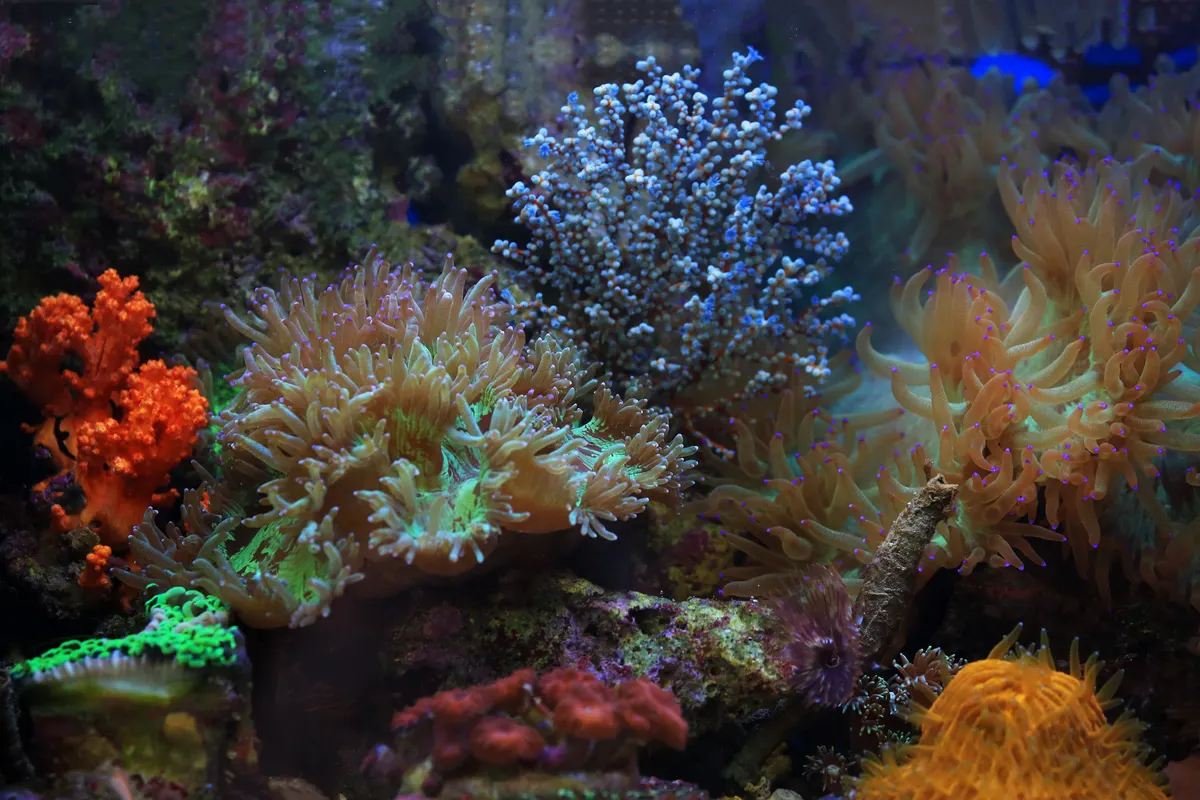
Saltwater is the step people ask about once the freshwater tank is running. It is the same hobby with more equipment, more testing and less room for a mistake. We have no saltwater guides yet, so this is the honest overview and nothing more.
What carries over is most of this page. Tank, stand, filtration, heat, light, cycle, water changes. The order of purchase does not change, and most freshwater aquarium supplies do the same job in salt water.
What gets added is a list. Salt mix and a way to measure the salinity. Water movement pumps, because reef animals want flow rather than still water. Live rock as the biological base. A protein skimmer on many setups. Reef lighting, which is a different specification from a freshwater plant light.
Water changes stop being tap water plus conditioner. Reef keepers mix salt into purified water, and many run a filter unit at home to produce it, because what is in tap water matters far more in a reef tank than in a freshwater one.
Testing goes up as well. A freshwater tank is watched through the cycle and then occasionally. A reef tank is tested on a routine, for more parameters, permanently.
Nano reef tanks look like the cheap way in, because the aquarium supplies bill is smaller, and they are the harder way in. They are small volumes, which brings back the stability problem from the top of this page, and small volumes swing fastest exactly where the margin is thinnest.
My read after a day of reading is that the standard advice is right. Run a freshwater tank first. The cycle, the testing habit and the water change routine are the same skills, and it is far cheaper to learn them in fresh water.
Aquarium supplies to buy first, in order
New owners tend to buy the fish first and the aquarium supplies afterwards. Run it the other way. This is the order I would buy in for a first freshwater tank going up this month.
- The tank and a stand rated for it. Plain rectangle, the biggest size the room and the floor will take, on a stand that carries the load through its corners.
- The filter, rated above the tank size. The one piece that is not worth saving money on, and the one people undersize.
- Heater and a separate thermometer. Wattage per the maker’s gallon guidance, placed in moving water, with the thermometer at the other end.
- Substrate and the hardscape. Rinsed until clear. Decided now, because this is the layer you cannot swap later.
- Water conditioner and a liquid test kit. Both used before a single fish arrives, and both used forever afterwards.
- Light on a timer. The timer costs almost nothing and prevents the most common algae problem.
- Lid, and a siphon with a dedicated bucket. The lid saves fish that jump. The bucket never touches soap.
- Fish, last, and a few at a time. After the cycle finishes, chosen on adult size and on what they need around them.
Note: the two aquarium supplies new owners skip are the test kit and the timer, and they are the two cheapest things on the list. Every expensive beginner problem in a day of reading traced back to one of them.
Aquarium supplies questions, answered
What aquarium supplies do you need to start?
A tank and a stand rated for the filled weight, a filter rated above the tank size, a heater and a thermometer, substrate, a light on a timer, a lid, water conditioner, a liquid test kit, and a siphon with a bucket kept only for the tank. Fish come last.
What size fish tank is best for a beginner?
Beginner advice steers away from the smallest tanks, because a small volume of water swings fast and a larger one forgives a mistake. Twenty gallons is where most of that advice lands, and 50 to 55 gallon tanks are the common next step.
Do you need a filter and a heater in a fish tank?
A filter holds the bacteria colony that processes waste, so it is doing more than catching debris. A heater is needed for tropical species, which covers most popular aquarium fish, and its job is a steady temperature rather than a warm one.
How long before you can put fish in a new tank?
Weeks, not days. The tank has to grow the bacteria that turn ammonia into nitrite and nitrite into nitrate, and a liquid test kit is the only way to know it has happened. Owners wait until ammonia and nitrite both read zero.
How often should you change aquarium water?
A partial change on a weekly routine is what most owners describe, using a gravel vacuum so the substrate is cleaned at the same time. New water is matched for temperature and treated with conditioner before it goes in.
Are fish tank supplies different for saltwater?
Most of the aquarium supplies carry over, including the tank, stand, heat and light. Saltwater adds a salt mix and a way to measure salinity, flow pumps, live rock, often a protein skimmer, reef lighting, and far more routine testing. Most advice is to run a freshwater tank first.
 Gunner Vance